This is Gareth Owens, and he discusses Aortic Dissection...
Transcript (auto-generated)
This transcript was generated automatically and may contain errors.
Good morning ladies and gentlemen, I'm very conscious that I am the only thing standing between you and your lunch. The way I look at it is this, if I have to endure 20 hours of open aortic surgery just to be here, you can endure 20 minutes of me talking about it. Now, it's a great pleasure for me to be here and to be able to speak to you this morning for three reasons. The first reason is that I will never miss an opportunity to talk about and raise awareness of aortic dissection because that's what we're all about and it's a great pleasure to be able to do that this morning although I know I'm preaching to the converted in a sense. The second is that frankly over the last 18 months there have been times when it looked like I wouldn't be here at all and those were times when I had to make a very deliberate decision that I was going to survive and die another day as the title of my talk says and the second theme apart from awareness running through the few words I want to say this morning is attitude and its effect on on the individual so awareness attitude and the third reason it's a pleasure to be here is it's a great pleasure to share a speaking platform with so many leading professionals in the field of aortic disease and I don't know what I quite did to deserve that but cooperation with a medical profession is the third theme that's going to be running through the few words I want to say to you so awareness, attitude, cooperation. Before I launch into a little bit of my aortic dissection journey I suppose I should just explain what is it that qualifies me to be standing here as part of this very illustrious speaker panel so let me give you a little background. This is a picture of me taken on my 25th wedding anniversary actually which will become relevant later. I'm basically a working class lad from the South Wales Coalfield who came to England to get an education and who married a Yorkshire Rose who's sitting in the audience and therefore stayed and adopted Yorkshire as my home. My upbringing I think with hindsight was a bit unusual although it didn't seem so to me at the time. I'm the only child of blind parents and my mother was a staff nurse who lost her sight due to retinal disease in her mid-thirties. My father had Marfan Syndrome and lost his sight due to retinal detachment in his early 20s. They were both sent to a rehabilitation centre for the newly blind where they met and married and I was the result. I inherited Marfan Syndrome from my father and sadly Marfan Syndrome, we've heard a bit about it this morning, but about 50% of people who have Marfan Syndrome suffer aortic dissection. If you have Marfan Syndrome your risk of an aortic dissection is about 250 times higher than the general population because Marfan syndrome is a disease of connective tissue and the aortic wall is partly made of connective tissue and therefore it's very weak. My father when I was 11 years old had an aortic dissection, a dissection of his descending thoracic aorta in the middle of the night. He was taken to hospital by ambulance where he died about six days later and so at 11 I was surrounded by doctors examining me and diagnosing my Marfan syndrome and trying to work out my prospects, Vittoria mentioned something about the psychological implications of living with genetic disease. If you want to understand that, picture an 11 year old boy who's just lost his father due to Marfan syndrome through an aortic dissection who has been told he has the same condition and has been quoted the statistic that I remember to this day which is the life expectancy of somebody with Marfan syndrome at that time was 32 plus or minus 16 years. So you need to sort of take that in and develop a strategy for life when somebody tells you that. And my strategy was to say well okay I'm gonna live until I'm 16 and I'm gonna do my O-levels. And when I've done that and I had done that I thought right I'm gonna live until I'm 18 I'm gonna pass my A-levels. And I thought right now I'm gonna live until I've been to university and finished my degree. And so it went on and so my mindset from the age of 11 was that I was likely to die of an aortic dissection before the age of 50. My dad was 49 when he had his dissection. And that that really set my expectations for my life and was an ingrained part of my mindset as I went through it. Everything went fine. I had routine echocardiograms every year. I had a nice letter from the consultant saying your aortic is fine, your aortic root is three and a half centimeters, no problems there at all, until in January 2007 I had a heart attack, don't know where that came from, it was a non ST elevated MI for those of you who know what that is, but I had an angiogram afterwards, arteries were all clear, so I kind of just did the cardiac rehab and went back to work and got on with life and forgot about it. The only The only thing that changed was the echo's frequency started to decrease. So there seemed to be a bit of an attitude of, well, you know, you've cut to your forties and you're almost the same size as it was when you were twenty, so there's less likelihood of something happening now. So I went from one-year echo to two-year echoes to three-year echoes. The very last time I went for an echo, the consultant said, well, you're absolutely fine, I'll come back in five years. Sadly, before I could go back in five years, in March 2016, I had an acute type B aortic dissection. I was in the pub with my choir in central London, singing after rehearsal, and I had the classic tearing from the chest down to the groin, I had to lie down. But I was aware I had Marfan syndrome and I had been expecting this for 40 years. So I said to my friend, call an ambulance, tell them I have Marfan syndrome and I think I'm having an aortic dissection. Two Metropolitan Police officers turned up first with a defibrillator and I said to them I think I've got Marfan syndrome and I think I'm having an aortic dissection, which they stood back and said well we're not touching you then. Paramedics were soon behind and I was very fortunate that I was about a mile away from the Royal London Hospital which is a trauma centre and the paramedics phoned ahead and so they knew that somebody with Marfan syndrome and aortic dissection was coming in an ambulance and were able to prepare for that. As a result, I'll go into a bit more detail on this later, I had an open repair of my thoracic aorta at Bart's Heart Centre in May 2016 and I had an open repair of my abdominal aorta at the Royal London Hospital in May 2017. And this This is a picture of what my, roughly what my aorta looked like, so I think it was Mark who said that quite often type B opens up the left subclavial artery there, there was a flap there, dissected all the way down into the iliac arteries, in my case a little bit more extensive than this, so the dissection was down just beyond this junction with the external and the internal iliac artery on both sides. The renal artery wasn't affected, but the dissection flap was between the two kidneys, So one kidney was getting its blood from the false lumen and one kidney from the true lumen and sometimes the dissection flap was occluding the kidney so that was causing a bit of a problem. So that was my dissection experience and this is our 26th wedding anniversary, the day after my open repair of the thoracic aorta in Bart's Heart Centre ICU with the lovely Judith. The real advantage I had was that I was being treated at a specialist centre by a team of world class experts in aortic surgery and that made all the difference. I live in a tiny village in North Yorkshire and frankly I think if I had dissected there I probably wouldn't be here speaking to you today. So specialist centres make all the difference. Let me tell you a little bit about my experts. So this is what I presented with, I was taken to Barts in the Royal London and the first person I met at Bart's in the Royal London because they'd phoned ahead was Sandip Sarkar who is a consultant vascular surgeon and Sandip very quickly said yes I agree with you you are having an aortic dissection and within 30 minutes of getting into A&E I was in the CT scanner pictures were done and immediately libetal all-inclusion to lower the blood pressure, morphine for the pain, cardiac surgery team were on standby and everything was put in place and there was an emergency plan there. Sandip told me that the CT scan showed that not only was the aorta dissected but there was a six centimeter aneurysm in my chest and there was a four and a half centimeter aneurysm in my abdomen. He thought the chest aneurysm was the most serious problem at that point in time and he thought that the strategy would be to deal with them separately. It was very early days. I said to Sandip this is just history repeating itself isn't it? I said my dad had this, he was brought in an ambulance, he survived a few days, let's be realistic I've got a few days haven't I? And Sandip Dixkeridit said maybe, he said the next few days are absolutely critical for you, he said we'll see what happens but we can do some things that we couldn't do 40 years ago when your dad dissected. He said we have some techniques that if you survive the next few days we will be able to deploy and what Sandip did in that very short bedside conversation was gave me hope and I'd say to you those of you who are medical professionals never underestimate the power that is yours to give the patient hope because my mindset remember had been I'm going to pop the clogs at about 50 of an aortic dissection and that had been my mindset for 40 years and in that one conversation Sandeep turned around my mindset and gave me hope and that made me decide well if there's hope that I can survive then that's what I'm going to do and I'm going to die another day. So Sandeep sent me off first of all to Barnes where I met another lovely gentleman Professor Rakesh Appal who did this in a lengthy operation in May last year, just opened up the thoracic aneurysm and it replaced it with a Dacron graft, one of which you will see on the table at the back, I brought mine as well but look at that one, and fantastic I mean you know this is very major surgery and I was I talked to to Rakesh a lot about the risks, the risk of survival, risk of kidney damage, the risk of stroke, the risks of paralysis and all of that and he had very good answers as to how he's going to manage all of those things and off we went and did the surgery. I did very well actually. I had a I had an infection in the wound where my heart bypass machine was connected into my leg which took a few weeks to sort out and my aneurysm had moved my left recurrent laryngeal nerve. So those of you who were here last year at the Brompton at this event will remember I couldn't speak at all and some of you are thinking yes Gareth, I liked you better then. More time for lunch. But that took about five months to resolve spontaneously. I still can't sing quite as well as I could but the voice is back almost to normal. So those were my two complications. After a year of recovering, well actually after six months, I went back for a CT scan and found that the abdominal aneurysm had grown quite rapidly and the way I think of it is it's like one of these balloons that you make party animals out of that you squeeze one end of it by putting a date on graphene and the other end bulges. So the abdominal aneurysm in January this year was six centimetres so it had grown a centimetre and a half since the previous surgery in May and that was an indication that probably it was going to keep on growing and rupture fairly soon so I needed a very good vascular surgeon and Barts and the London are a single trust and I was referred to Paul Flora at the Royal London Hospital who is very well known for his work on the abdominal aorta and hopes to join us this afternoon. He was going to be here all day, he had a clinic this morning and I said look you really need to see your patients but he is hoping to join us this afternoon so you know shake his hand and tell him what great job he did if you see him. And what Paul did was in May of this year gave me an equally large operation to replace my abdominal aorta and the iliac arteries. Actually the graft he put in was slightly larger than this one because the tissue was fairly weak because it was Marfan syndrome and it was dissected down to the junction of the external and internal iliac arteries, and he wanted a good landing zone that he could stitch the graft into. So he took the legs of the trellis of graft beyond that junction and sewed them into better aortic tissue. So that was about a 10-hour operation. I had a big inflammatory shock at the end of it, so they couldn't sew me up because everything had swollen so much, so they packed me off to ICU with my stomach still open and then sewed me up the following morning. I don't remember any of this. I woke up the following day to be told by my wife what had happened and spent a few days in intensive care in the Royal London. The big thing with abdominal aortic aneurysms is bleeding. There was a huge risk of bleeding. There's a wonderful technique called cell salvage where they capture your blood that comes out and recycle it and put it back into your body. But despite using that I still needed a 30 litre blood transfusion. I think I held the Royal London record for a while for blood transfusions, which is six times the volume of blood in my body was used. So the great thing about being in a trauma centre like the Royal London is the fridge is always full. So that was my experience with the experts and as Mark said, type B dissection is a very complicated thing, the strategies are still evolving. What I was impressed by was not just the individual skill of these guys, but the team and the protocols that exist at Barts and the Royal London for doing this and for doing complex aortic surgery. As somebody who's kind of led large organizations for a lot of my career, I was very impressed with the team and the organization of protocols here and how they worked out for me and the multidisciplinary approach that came up with this strategy of what was called staged replacement of the aortic tree. And they've also put me in a very good position that if the middle section of the aorta develops a problem, I now have a graft at the top and a graft at the bottom, which means I'm a candidate for stenting between the two grafts because now the grafts are there, they're places that stents can land whereas a Marfan's aorta isn't necessarily so good for that. So I think that what we need, to go to Jane's point, is a national network of these specialist aortic centres where all the tools and techniques and protocols and best practice that we know about are present. cardiologists, the geneticists, the cardiac surgeons, the vascular surgeons, the critical care people, so that we have an optimum care package and an optimum pathway for the treatment of aortic disease. That's what we need as a nation. And I don't think that any patient should live more than two hours away from a centre like that. And then we need the awareness of people who see patients to refer them into those centres. And that's really what we're about as an organisation, is trying to achieve that. And I totally agree with Debra, failure is not an option. Let's just have a look at how far we've come talking about that. So I didn't know a lot about aortic dissection before this happened to me but the history is quite interesting. 250 years ago in 1760 King George II was the first documented case of aortic dissection. He had a dissection while sitting on a lavatory. I tend not to spend as much time in there these days since reading that. And for the next 200 years nothing much really happened. You really have to look until you get to 1950 before things started to happen in our ability to treat aortic dissection. And then things started to happen fairly rapidly. So 1951 in America was the first successful open surgery for aortic dissection. Invention of the left heart bypass in 1952. In 1953 invention of echocardiography so that doctors could visualize the aorta. 1954 was the advent of Dacron grafts like the ones you'll see from Basquetech at the back. I've got a super picture here of the the legendary American cardiac surgeon Michael DeBakey. I love this picture. This is Michael DeBakey making aortic grafts for his patients on a sewing machine and with a pair of scissors in about 1955. Now that's pioneering surgery and Michael DeBakey initially was a leading light in early aortic surgeries to the extent that in 1965 the Duke of Westminster travelled to Houston and had an open surgery on an abdominal aortic aneurysm by Michael DeBakey, because the techniques hadn't crossed the pond yet, even though they were available. 1980 a CT scan, 1990 stent grafts and MICE followed up pretty quickly actually and produced guidance on the use for stent grafts in thoracic and then abdominal aortic aneurysms in 2005 and 2009. So a whole era of progress that I called the advent of aortic dissection surgery. And it's really quite remarkable what's happened in the last 50, 60 years but actually if I look on the timeline this is my dad's aortic dissection in 1976 and as I mentioned most of these techniques had not crossed the pond even if they had they hadn't reached the district hospital South Wales where he was taken, and so he didn't, wasn't able to benefit from any of that, whereas I in 2016 was able to benefit from all of it because it was deployed in a specialist centre in central London. Huge difference in what could be done for me and a huge difference in outcome. And so I'm really here today because I'm living proof that it's possible to do extremely well after complex aortic dissection surgery. I'm delighted to be to be in that position. Who knows what the future is going to hold. You know the vascular surgeons tell us that stent grafts are going to take over the world. Well we'll see if I can find a way to anchor them and stop them moving and leaking maybe that's true. But nonetheless it's good news you know and if you're going to have an aortic dissection today is probably the best day in history to have one. You're not in a bad place today either. What does that mean? What does that mean in terms of outcomes? These are very general outcomes that I borrowed from the Office for National Statistics. But this is the death rate from the three main disease groups over the last 20 or 17 years. And you can see the yellow line is diseases of the circulatory system so that includes the heart and the aorta. And the drop is dramatic. I mean the And the news here is that since 2000, which is not that long ago, the death rate from diseases of the circulatory system in men and women has been halved by advances in medicine that are going on at the moment. And in 2012 the death rate dropped below the death rate from cancer for the first time. So that's the blue line. And the bottom line, the black line, is diseases of the respiratory system. So if you are an aortic dissection survivor, you're on that yellow curve helping to make it lower okay because 10, 20 years ago many of us who are in this room wouldn't have survived what we have survived because of the result of advancements in modern medicine. So you know that if you are one of the people here who treats aortic dissection patients you are driving down that yellow line that's what you do on a day to day basis and that's really exciting that would get me out of bed in the morning if I worked in the medical profession okay so there's remarkable progress going on here and that means one thing for me which is that given we've got all the tools and techniques, and I've heard this morning that basically all the building blocks are there, we know how to treat aortic deception, yes it's professionally challenging, but the ability to diagnose is there, the ability to manage it medically is there, the ability to do surgery is there, there's really no excuse that people are still dying because of the lack of proper diagnosis, the lack of access to these kind of tools and techniques, and that's what we need to address. And I'm very motivated to make sure that everybody who suffers an aortic dissection benefits from the kind of expertise and the kind of treatment that I was lucky enough to have. And that's what we as an organisation are about, and we'd love to work with you James, you try and do something nationally, you know, in order to deliver that and to improve the survival rate for people suffering aortic dissection throughout the country. We're a UK organisation, oh and I won't forget Ireland, Catherine, because I know Catherine, Ireland's very close to Catherine's heart. So there's no excuse, you know, that if the technology exists and the professionals exist and the expertise exists, there's no excuse for not doing that and giving access to it to everybody. It shouldn't be a luxury. What's my ABC of survival then? So awareness. I've talked enough about that. Be aware of the conditions, be aware of the risks, make sure you get the right monitoring and testing. My dissection was a bit of a failure of monitoring and prevention really, because I've had an echo for 30 years, every year, but nobody ever looked at my descending aorta, despite having mouth hands, and despite my dad having a descending aorta aneurysm, a dissection. So, get the right monitoring testing. I think bloody-mindedness is really important Stefan. I think attitude is really important and it does affect your results and I think cooperation with the medical professionals is equally important. So awareness means I am informed. Does anyone know who that is? Barbara Castle, no, sadly not. I'm amazed nobody recognises her. Gloria Gaynor, thank you Jan. Why is Gloria Gaynor on my slide? I will survive. This could have been written for us. It took all the strength I had not to fall apart. Just trying hard to mend the pieces of my broken heart and aorta. I spent oh so many nights just feeling sorry for myself. I used to cry but now I hold my head up high. Did you think I'd crumble? Did you think I'd lay down and die? Oh no, not I. I will survive. Never underestimate the power of attitude. Cooperation. When you're bloody minded and you're going through something like an aortic dissection, you can adopt an attitude and it can see you through. But you know what, it can make you appear a bit difficult to other people sometimes, especially to the people trying to treat you and help you. So cooperation for me is about being informed, having the right attitude and working with the people who are providing your care, whether it's your wife or partner or carer, the professionals caring for you. We have really good teamwork going on down in the Royal London and I'm really pleased that we did. I'll give you an example. I pitched up for my second operation, my abdominal one. We went down from Yorkshire, got into the Royal London, all psyched up, maybe I'll survive this, maybe I won't, you know, said goodbye to the children, all that sort of thing. Got to the surgery and my surgeon Paul Horrow came in at about lunchtime having kicked our heels with the surgical team all morning and said I'm really sorry, we haven't got an ICU bed today so we can't do this all-day procedure that you've come all the way out there for. And I could have kicked off and said this is outrageous, this is the worst, why can't I have a bed, I've come all the way from Yorkshire, I'm not leaving until you sort me out. And I thought do you know what, that's not the right thing to do because when I got brought here in an ambulance it was me that needed the ICU bed. So I said to Paul, I said look, that's okay, let's reschedule of it and he said well you know what it's lunchtime I've had my team all psyched up to do this and I need a fresh team to do this surgery it's complex and it's difficult so even if I got a bed now I wouldn't want to start on you today and we said that's fine let's call it a day knock it on the head and we'll come back in a few weeks time and that's what we did three weeks I think it was came back it was a nice new bed everything went smoothly so cooperation works wonders and you know in the medical profession they have a tough job and this isn't an ingrowing toenail. I know these guys make light of what they do every day but actually this is professionally some of the most challenging things that surgeons do and it's well acknowledged that the aortic dissection is a serious professional challenge for even the best surgeons. So let's respect that, let's cooperate with those who are looking Finally, just to wrap up really, this is a picture of my youngest son David, who is inherited by Marfan syndrome, and he's really a living example of putting this ABC into practice. awareness, he's 19, he knows it all. Attitude, he's 19, but he's got a very positive attitude to get on with life despite his Balfour Syndrome, but he's having the right scans, he's under the care of the guys in Leeds General Infirmary, he's having his ECHOs, he's having his MRIs. Cooperation, yeah he's participating in the Ames clinical trial which is looking at Lezartan as a a treatment or as a potential preventive measure for damage to the aorta. So he's clued up and I hope he's going to carry on putting these lessons into place throughout the rest of his life and partly for all those other AD patients out there I like to champion awareness and partly for David because he's the third generation of the family that's coming through this cycle and things for him are only getting better as we do our work and as you medical clients do your working in the field of aortic dissection. There's one final tip which Dan here shared with me a few days after I came out of hospital after my first operation, when I found the buddy group. And he said, Gareth, if you're dealing with aortic dissection in any shape or form, he said, there's one important tip, he said, when you wake up in the morning, check the pulse. He said, if you can still feel it, then today is a good day. So what wanted to live by. Ladies and gentlemen, thank you for your attention. It's been a pleasure to be here. Thank you. Thank you.

 Health Shared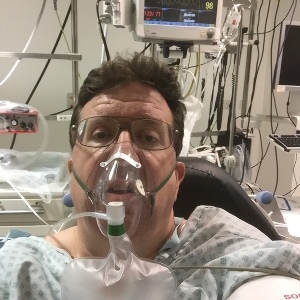


Comments