This video discusses aortic dissection awareness...
Transcript (auto-generated)
This transcript was generated automatically and may contain errors.
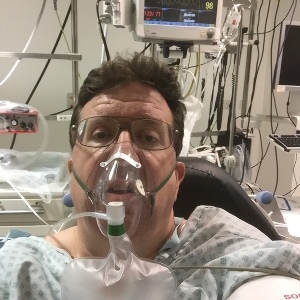
Welcome back, our next guest has had a rollercoaster of a year. In 2019, life was good for Stephen Curry. He was young, fit and engaged to the mother of his child. But a year ago, he nearly lost it all after a crippling pain in his chest, resulting in an early diagnosis of aortic dissection and a gruelling nine-hour surgery that saved his life. Well, now back on his feet and on the road to recovery. Stephen wants people to better understand the symptoms of this rare condition and he joins us on the line along with emergency medicine consultant Dr John Cronin. Gentlemen, good morning and thank you for joining us. Steve, we might start with you. We appreciate you coming on and telling your story and you might start with that, you might share your story and take us back to when you first found yourself in trouble, when you first came across some of the symptoms. Take us back to those days Yeah, no problem. Just like any normal 30 year old really. Occupied with family life and trying to be a good father to Bradley. and we were due to get married eight weeks after the ordeal, so when I got the pain in my chest, I suppose, it was a bit of a surprise. I'd never really had any health problems prior to this, so yeah. So there was no kind of journey to this chest pain that you felt. It was all quite sudden, Stephen, was it? Yeah, there was no warning whatsoever. Okay, and what did you feel? Just think of pictures. So what did you do Stephen? Did you go to your doctor or the hospital? And how quickly was it diagnosed in terms of this isn't something, you know, this isn't indigestion, this is a serious problem? I kind of immediately thought something wasn't right. So she told us upstairs put my uncle out of bed so I caught her downstairs and she rang the out-of-hours doctor but there was no answer so I immediately rang the ambulance and took her from there. They were arriving in 10 minutes. And you were taken to hospital and what happened then Stephen? Originally I was being diagnosed with a heart attack, as often an Aortic Dissection can mimic a heart attack, so I was given the aspirin, told I was having a heart attack, I went to the A&E department and it was a couple of hours I was waiting, I was still being diagnosed a heart attack patient and a second opinion was called in for him and that's when I was sent for a CT scan as I think a CT scan is the only definitive way to diagnose an aortic dissection. Dr John Cronin, we might bring you in at this point. Talk to us about the condition and what Stephen was diagnosed with, an aortic dissection. Can you tell us what that is and were Stephen's symptoms the norm? They were Simon, but it can present differently sometimes. So the aorta is the largest blood vessel in the body and it comes out of your heart, travels down through your chest, down to the abdomen and the whole way along it gives off blood vessels to important organs like your brain, kidneys, your gut and what happens in aortic dissection is that you develop a small tear on the inner lining of the aorta and so the blood instead of going down through the tube through the vessel to where it's supposed to go it builds up inside the wall and so that can do a few things. Firstly it can block the blood vessel so blood can't flow normally and it can also essentially tear through the aorta and cause catastrophic bleeding into the chest and it can also block all those blood vessels or some or all of those blood vessels that come off, so the blood vessels to the brain and the kidneys and whatever. So classically it presents with a chest pain but the chest pain, a lot of things can cause chest pain, but the chest pain in this case is usually of a very sudden onset like what Steve was describing there, so he was a totally normal guy, totally well and got this sudden onset of pain out of the blue and it's often described like a light switch and it's worse, it doesn't build up gradually if you know what I mean, it's worse at its onset. And the pain can do a few things, it can travel to different areas, so from your chest through to your back, it can go to your neck, it can travel down to your tummy in the same way that your aorta does. So I'm just going back to those blood vessels that come off, because they get affected, those other organs can be affected. So sometimes people can collapse because the blood vessels to the brain are blocked, or they can present with symptoms that are kind of like a stroke, because again, those blood vessels are blocked. So I think Steve is very fortunate that the team at Wexford General Hospital thought of this, and Steve is absolutely right in what he said, in that the only way to diagnose this is with a CT scan. So if there isn't a blood vessel or there isn't a blood test or an x-ray, that will show you often they're all completely normal. So in our education report we do for young doctors and people who might be coming across this condition, we try to emphasise that the only way to diagnose it is to get a CT and to get the CT early. Because you can imagine with what's happening with that blood vessel right next to your heart, for every minute or every hour that you delay, the mortality rate for this condition can be very high or it'll go up by the hour. And is the automatic procedure then surgery because it sounds as you say time is of the essence when this is diagnosed and we know that Steve underwent nine hours of surgery, Is that the normal treatment path? So there are two different types, I'm going too much into technicalities, but there are two different types. There's one type of dissection that starts right at the base of the aorta at the heart, that's a type A, and there's one that starts further down the aorta, that's a type B. So the type A's, which I think is what Steve had, if I'm correct, generally will always require surgery. surgery. The surgery that it needs is a cardiothoracic surgery, so there's only certain specialist centres in Ireland that do that. In Dublin, you have James' and the Mater and of course University Hospital down south as well. So it was really key for that team in Wexford General to get that scan, get it early and as soon as they noticed that condition to get him to the cardiothoracic centre for that surgery. There are some of the type Bs that I mentioned that sometimes require surgery but sometimes can be managed with just controlling the blood pressure and monitoring the patient in the hospital. Of course and as you say John, getting to the hospital as early as possible to get that expert help is what's so important here and ultimately Stephen what saved your life I think? Definitely, yeah. I can't take it quite to general hospital enough. Getting that quick diagnosis and getting me to the Mater hospital. And how are you feeling now, Stephen? Well, 16 months out, I'd say it's only in the last 5-6 months I'm starting to feel a little bit more confident and a little bit better but mentally it can't take a stall. I've came across people who have severe depression, anxiety, panic attacks. The information for a patient isn't really out there after a dissection. So I just got myself onto Google and Facebook and I found myself AR to Dissection UK Buddies. And it's through other survivors and their families that I found community and information and low power. So you're finding support and advice and help through that? Well we wish you well and maybe we'll talk about that in another item down the line Stephen but take care of yourself you've been through an awful lot and Dr. John Cronin thank you very much for joining us this morning as well. Thank you. Lots more to come here on Ireland AM this morning.




Comments