This video is about my Aortic Dissection journey...
Transcript (auto-generated)
This transcript was generated automatically and may contain errors.
I only have one slide so what I'm going to do now is just give you a patient perspective of life before AD. I wasn't a Barts patient before I had an aortic dissection, in some ways I wish I was, having heard what goes on this morning but I want to go on slide and it'll be very quick this is my my story really I I was born at a very early age in bed with my mum and you can't see that it's probably just as well it's just a picture of me and my mum and dad and we've heard a lot about Marfan syndrome this morning. I have Marfan syndrome. I inherited it from my dad. Dad died of an aortic dissection age 49 due to Marfan syndrome. He had a lot of problems with his eyes as well. He lost his sight in his 20s due to Marfan syndrome because that's one of the things Marfan does. met my mum because she lost her sight, not due to Marfan's, and she was sent to a rehabilitation centre for the newly blind. My dad was working there as a mobility instructor, so they met and fell in love and married, and I was the result. Some of you heard that story before, I know. So dad didn't have any cardiological monitoring or surveillance. This was the 1970s in South Wales, suddenly had a dissection in the middle of the night, just before Christmas 1976, and was admitted to hospital. And there was not a lot that could be done for him at that point. So he lived a few days and sadly died just before Christmas of his dissection. And my memories of that time are, I was 11, so my memories of that time are kind of a very dark time in my life, I suppose. And I can remember very clearly just after Christmas in this kind of working class, steelworking mining town in South Wales, lots of burly men who were my father's friends coming to pay their respects in the week after Christmas and putting their hand on my shoulder as they went out the door and saying, well, Gareth, you're the man of the family now because I was an only child. So that was how this rather studious young boy became a man at Christmas 1976. It was interesting that I didn't see a cardiologist after what happened to Dad, which was surprising. There was a lot of people saying, well, you've got two blind parents. It's your eyes that you need to worry about. I was told, perhaps you should learn Braille just as a precaution. That was helpful when you're 11 years old. But cardiologically, nobody really didn't have annual monitoring. I went to see the GP, who said, if ever you get sharp tearing pains in your chest or up and down your back, go to A&E. That was my advice. They also said, you've got this Marfan syndrome thing. And life expectancy for you with Marfans at the moment, this is in 1976, is 32 plus or minus 16 years, which is quite something to take in when you're 11 years old. So my mindset for the first 50 years of my life was that I was going to die of an aortic dissection at some point before I reached the age of 50. And that's quite a psychological burden. I carried on with life. I'm a fairly bloody-minded individual, to be honest. And so I ignored all of that and thought, no, I'm going to join the Royal Air Force and I'm going to fly airplanes. That's what I'm going to do. That's my life plan. And Marfans is one of those things that it is a condition you can live with and you can have a very successful, fulfilled, an enjoyable life, but in my case, once a decade, it kicked me in the teeth with something acute. And you just have to watch out for that. So in 1989, I had a retinal detachment, lost the sight of my right eye. And I had a marvelous retinal surgeon who restored my vision for me at Moorfields Eye Hospital. And in 1998, two years later, my lens is dislocated. And we heard earlier on how lens dislocation can be a Marfan's thing. It can be a predisposition or an indicator of future dissection. More surgery at Moorfields and Moorfields did really well. They got rid of my thick glasses. They took my lenses out. They put little plastic lenses in my eyes and they gave me better vision than I'd ever had before in my life. It was brilliant. And then in 2007 I had a thing called an NSTEMI which is a heart attack basically. That was a bit of a surprise. Clear angiogram. Did to cardiac rehab, thought right, I'll just go back to work now and get over that. So each time, every 10 years, an acute episode. And in fact, my AD was 10 years after that. I'll talk about that later on. But in between times, I think it's important to have the right monitoring. I didn't have the right monitoring. I studied medical physics at university. And my final year project was to make a phonocardiograph. That's a device that listens to heart sounds. So I made my phonocardiograph, and I strapped it to my chest. And one day, I stood on the treadmill, exercised, and I took the trace to the physiology lecturer, who was going to use the device that I'd invented. Well, not invented, built. And he said, where did you get this? I said, off my machine. Yes, I know, but who was the machine attached to? I said, me. He said, do you need to go and see a doctor, Gareth? Because my phonocardiograph showed a mitral valve prolapse, which I didn't know I had. So off I went to the GP and said, I built a machine. I got this trace off it. I'm told I've got to come and see you. And that represented my first referral to a cardiologist at the age of 21. And from there on, I had annual echo. And of course, echocardiography, yes, we're checking your aorta, Mr. Owens. And it's all fine. It's not growing. It's 3 and 1⁄2 centimeters. That went on for 30 years until suddenly, I'll tell you about this later, I keeled over and had an aortic dissection of the descending aorta, which had never been looked at. So that was a bit of a failure of monitoring and surveillance. And it was interesting to hear what Kate was saying about the way you use MRI to look at the descending aorta as well. And I know a lot of clinicians now are changing their practice in Marfan's so that they look at the whole aorta, not just the ascending aorta. And that's totally appropriate. So getting the right monitoring is absolutely vital. Don't miss your appointments. If you're not getting your regular monitoring, ask and get referred for it. Being aware as patients of the risk is vitally important. I'm preaching to converted here, but this is why we run these events, is so that patients are informed and aware. I was lucky enough that when I dissected, I could say to the ambulance man, I've got Marfan syndrome, and I think I'm having an aortic dissection. Believe me, that shortcuts the A&E journey quite considerably. So be aware of the risks. I was offered some genetic counseling. When I became, actually, I think when I got engaged, the GP sent me off to a genetic counselor who talked about the 50% risk of passing on Marfan's to my children. Our view was that it was possible to live a perfectly happy and successful and fulfilled life with Marfan's syndrome. So that's a risk that we would take. We have three children. My youngest son, David, has Marfan's syndrome. The other two are unaffected. So attitude is also important. It was very important to me, thinking as I did, that I might have a limited life expectancy. It was very important to me to say, what do I do about that? And I decided, well, if I can't add years to my life, I'm going to add life to my years. And I like to set goals for myself, sometimes quite stretching goals to aspire to. So I wasn't able to join the Royal Air Force. My eyesight was too bad. I had Marfan syndrome. There was no way they were going to take me. So I had to find an alternative career path in IT. But after my endstemmy and after my eye surgery, I thought, I wonder, I wonder if I can fly an airplane. So I went and got a medical, and sure enough, that was OK. So I took a summer off, and I learned to fly airplanes and fulfilled my ambition. And so I was really pleased with that. And it was one in the eye for the people who told me I needed to learn Braille and not think about doing that sort of thing in life. So that was great. And I'm just in the process of negotiating with the CAA as to whether I can get my pilot's license back post-audit dissection. Set goals, pursue your dreams, go for it. Don't let things like this get in your way. And the second thing that happened was I thought I'd quite fancy going back to academia, really. I was working at the time. So I had an opportunity and I thought, great. So I went back. I went to Oxford and I did a master's part-time. And this is my family at my Oxford graduation, which was, again, before AD, but post-MI. Two things I never really thought I'd achieve in my life. But I think taking the right attitude. Some of you heard me speak about this last year, having the right attitude towards your disease and realizing that these acute episodes are just incidents in a very much longer lifetime. and they're really serious at the time, and we have to really strive to get through them. But having a condition like Marfan syndrome, having an AD is not the end of the world. There are still fantastic things that you can do. That's the kind of pre-AD story for me. Oh, one little anecdote. I think one of the speakers mentioned Abraham Lincoln. And I was once having a medical, actually it was a flying medical with a very eminent London doctor who had me lying on the table, And I had an ECG machine strapped to me. Oh, Marfan syndrome, Mr. Owens, he said. Yes, I know about that. He said, that's what saw Abraham Lincoln off. And I said, really? I said, Abraham Lincoln may well have had Marfan syndrome, but I'm pretty sure it was the assassin's bullet that killed him. Silence. So be aware, and you can always have interesting conversations like that with your medical specialists. I wanted to follow up the surgery session that we had before lunch with Professor Wu and Mr. Flora by just telling you very briefly my story of dissection surgery and recovery. This is a shorter version than I did at Liverpool last year, because some of you heard it before. it's important to share with you. 23rd of March, 2016 was the date when I was working in the city and I set off from my London digs and for some reason, I know not why, I took a selfie. There it is, all bright and breezy, off to work at the Bank of Canary Wharf. And at the end of the day, I took another selfie in A&E at the Royal London. So I dissected in a pub in Monument, not a mile from here. Paramedics came, I said, I've got Marfan syndrome, I think I'm having an aortic dissection. They said, right, Royal London Major Trauma Centre, that's where you're going. Off we went. I got to the Royal London and lots of people attended to me very quickly. And about 11.30 that Wednesday night, I met this gentleman over here, Sandip Sarkar, who was, I think, the on-call consultant vascular surgeon that night. And Sandip very quickly got me into the CT scan. When I hear about people waiting days for a CT scan, it's hard for me to relate to, because I just remember Sandip at my bedside going into the CT scan, which seemed a matter of yards away from A&E to me at the time. And then people crowding around the screen and saying, oh yes, look at that dissection. somebody shouting aggressive blood pressure management as I left in my trolley and everything started happening and Sandip was really making that stuff happen for me. So that was my dissection experience and I was very very fortunate to be so quickly diagnosed and what I needed was what we were talking about this morning. I needed an expert multidisciplinary team who were going to care for my whole aorta and that's what I found here at Barts Health Trust, NHS Trust. So I told you before that I thought I was going to follow my dad and die of a dissection around about the age of 50. And so the conversation I had with Sandip went like this. He said, yes, Gareth, you are having an aortic dissection. The scan shows it. And I said, this is history repeating itself. I said, my dad came into hospital an ambulance with this. He died a few days later. I said, I hope I've got a few days, haven't I? And we talked about the fact that the next few days were absolutely critical for me and I was very seriously ill and that my wife and my son should come down from Yorkshire and get with me as soon as they could. And then Sam drew me this diagram, I think it might have been a day or two after, I can't remember exactly when it was, but Sam drew me this diagram on a piece of paper and I've kept it because it's very special. I'm gonna get you to sign it later. But he said, here's your heart and here's your aorta and this is what's happened to you. He said, can you see that there's this normal tube here? That's where your blood should be flowing, but your aorta has bulged right out here and tapered all the way down from left subclavial artery, all the way down past your kidneys and into these iliac arteries here. Oh, by the way, you've got a big bulge there. That's an aortic aneurysm. You're dissected down into your iliac arteries, there's a flap here, the blood's going down into the false lumen with a classic double-barrel thing. You've got a very extensive dissection. He said, but if you survive and you get a bit more stabilized over the next few days, there are things we can do that we couldn't do when your dad died. He said, and what I think will happen is you'll go across the parts, and with the cardiothoracic surgeons, you'll have a very major open surgery on your aorta up here to fix that with a graft. And if you survive that and you recover well from it, then you can come back here to the Royal London Hospital and I will be happy to support you through this operation to fix the abdominal aorta and iliac arteries. And this is a special guy and for two things, for two reasons. After this, we went through the whole MDT process. I had every aortic expert and his dog in Bart's trust pining on my scans, having discussions about what the right thing was to do for me, and what stayed with me is this, that after all that happened, exactly what Sandeep put in this diagram that night is what occurred. Two operations went up the other, and that to me is a hallmark of excellence. If an expert in a very complex and dangerous situation can tell you how things are going to pan out, then that's a hallmark of excellence. And so that's the first reason that paper is very special to me. It should form part of your annual appraisal, Sandip, it really should. The second reason is, I thought I was dying. I had no basis for expecting a future at all. In fact, the evidence that I had, which is my dad's perception, suggested that I was dying. And what Sandeep did in drawing this diagram and having a five-minute bedside conversation was to give me hope. And those of you who work in health care never underestimate the power that is yours to give the patient hope. Because that, along any conversation I've had in my life, has so completely turned around my mindset as that conversation. And I thought, if there's hope, I'm going to go for it. I'm going to survive. I'm going to have the surgery. I'm going to live. and I'm going to recover. I didn't think I'm going to chariotic dissection awareness UK, but that happened too. So that was a very, very significant moment. And for those two reasons, it took away a lot of that psychological burden. So off I went. I had, oh, actually, it's probably better to show you this than tell you it. So I don't think Professor Ruppel is here, is he? He's probably operating still. Is Professor Wu here, or is he gone as well? Professor Wu, would you mind joining me? Is Mr. Flora here? We're just gonna, we're gonna reenact my surgery live on stage. That's what we're gonna do. Come on the stage. All right, here we go. This is the entertainment section. Mr. Flora, come join us on the stage. Right, great. Professor Wu, have you seen one of those before? Yeah, OK. You know what it is. OK, good. So first operation was here in the Bart's Heart Center with Professor Ruppel, and it was to implant a Dacron graft from left subclavial to T6. Can we do that? Not left subclavial, T6 is key. Hold it there. Hold it there, so that everyone can see. Are you happy with the positioning of that for the distal asthmosis? Because the distal asthmosis is the tricky bit, right? Yeah, it's a tricky bit. So just hold that there for me. Thank you. And Paul, it's a year later, Paul got, have you seen one of these? Is it so he's a bit of a lasher? Yeah, I've actually got a lot of lice. Yes, so if you could, Paul repaired my abdominal aorta and iliac artery, so if you can just, I don't mind, Paul, because you've been there before. Yeah. So. Yeah. Right, just hold it, sort of, under the kidneys, and yeah, you've got three ends there and only two hands. Yeah. I think we need Mr. Sarkar to assist with the iliacs, don't you? Okay, because Mr. Sarko is an expert in lower limb perfusion, aren't you? And David's just going to get a picture for the family album, if you don't mind, so I'll smile at the camera. And that, ladies and gentlemen, is how an expert multidisciplinary team repairs a complex aortic dissection. Thank you so much. Professor Uppal will be very grateful he didn't have to do that. So that was the surgery that I had. This is a picture of me in ICU at Bart's after the first surgery. This is a picture after the second surgery. I was quite poorly after the second surgery because I'd lost a lot of blood. But the ICU people at Royal London looked after me really well. And this is a picture of me recovering at our summer buddy's garden party in Ann Colton's house about six or seven weeks after the second surgery. Recovery's tough, it's the hardest thing I've ever done in my life. But one day at a time, slowly, slowly, gradually stretching yourself, and you get back to the sort of brilliant outcome you see before you today. So that was my experience. Main message from this, rapid diagnosis, quick CT scan, get into the hands of an expert multidisciplinary team. The research tells us that multidisciplinary teams deliver better outcomes for patients. So the second thing we want as a patient association is to see specialist aortic centers with effective multidisciplinary teams, where the surgeons are performing the right volume of these operations and are delivering better outcomes. I feel, having benefited from this approach here at Barts, I almost feel a moral obligation to ensure that all other AD patients in the UK can get access to the same level of care that I was lucky enough to receive here. And we are a long way from that. Some of you know that. I'm not happy to see people who are still being misdiagnosed. I'm not happy to see the stories of people who don't have genetic referrals, who don't have the right imaging and the right surveillance, who don't have the right surgery, who don't have the right outcomes. And that is what motivates us as a patient association to want to make a difference. Thanks for watching.

 Health Shared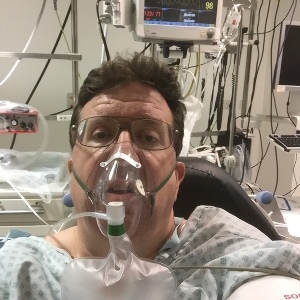



Comments