Transcript (auto-generated)
This transcript was generated automatically and may contain errors.
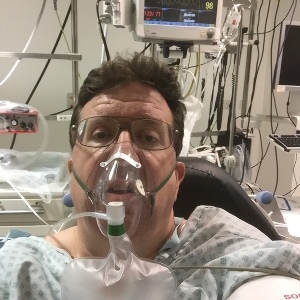
Hi guys and thanks very much, I just want to say I'm really glad to be here today to have this chat and tell my story So my name is Sandra Waffle and this is my story This picture here, I'm retired and I'm going around New Zealand Four days hiking, very strenuous course. I've run a marathon before, in fact I've run two, and I'm a big fell walker because I originally come from the Lake District. So, you know, really fit, really healthy. And in March this year I was at the gym, at the David Lloyd gym in Colchester. I was doing my workout, I had a personal trainer and all of a sudden I felt a ripping from my throat right down Tremendous pain fell to the floor and I knew it was really serious I knew it wasn't a heart attack and I just said to him, don't lie me down, please don't lie me down Sit me up and hold me, get me a chair, call an ambulance Unfortunately, the ambulance took about an hour to arrive, and I was kind of sitting in this chair, passing out, going black, black spots. The responders got there, and they did my blood pressure and my pulse, and just kind of kept checking me every few minutes. Eventually when I got to A&E in Colchester, I was very fortunate because the consultant there had actually done a dissertation on aortic dissection and he immediately switched the cuff to this hand and there's no pulse in this right hand side at all So it was big, now big. There was a huge panic CT scan. I'd already had chest x-rays, echo, ECGs, wasn't picking it up. CT scan was the only way. And to check the pulse on both sides. So I knew it was serious. My family had all gathered round. We all knew it was really quite serious. Now there's a big battle where they're going to send me, by ambulance, to Badildon or Papworth Papworth had a team on standby, rush hour traffic from Colchester to Cambridge And I got there with 15 minutes to spare They said I would be dead in 15 minutes Before I left Colchester Hospital, I have to say, the paramedics were with me, with the ambulance waiting And the control room said, no they don't want them to take me because it would mean they'd have to pay overtime They fought to take me, otherwise I'd have been dead, I'd have had to wait another half an hour And the reason why I know this is because, I'll show you the post-op fix This was me about three days post-op, a bit gruesome And I didn't know what the hell had hit me. I really didn't. And you can't move your arms for three months. You've got to keep your arms in a tube because you've got to keep your sternum straight because it's all wired up. It was pretty horrendous. The symptoms I had were pain, breathlessness, black spots, dizziness. but I did manage to stay conscious and one thing I would say, the first thing I said to people was this is my PIN number to my phone, you need to access these numbers on my phone and of course it hadn't got face recognition on it, so please just get the PIN number from these people get them to me and that's how I managed to get my family there As I say, Mr Abbas, the consultant, was absolutely amazing, and I was one of the lucky ones because he knew how time was of the essence. Anyway, Papus were waiting 15 minutes and then they told me, please sign the consent form. There's a very high chance that you're not actually going to make it out of theatre. And I said, can I just wait to say goodbye to my husband, and they said, no, we haven't got time. So, in I went. A period like that. And after six days, they sent me home. And I didn't know what hit me. Ten days later, I was so poorly, they called another ambulance, my family, took me in, and I got, my inflammation levels were all way, way high, and I spent the next four days going backwards and forwards and this Mr Abbas came in on his day off and I stayed in hospital during the day and I had IV antibiotics and another CT scan and he kind of just looked after me for four days but I cried so much that I begged not to have to stay in so he let me go home at night The next thing was, 6-0-0-12 is discharged. I found the AD Awareness UK Buddies group. That was amazing. The information on there is fantastic. And they are the ones behind the ThinkAuto campaign. The next picture, I think, might be three weeks post-op. It was Mother's Day and my family took me out for a meal. I didn't eat very much, but I was so grateful to be there with all the grandchildren. And then this picture here, because I'm from the Lake District, that mountain there is called Barrow. And I had looked at it and thought I would never ever get back up that mountain. And actually, five months later I walked it. Right to the top of that mountain. Slowly, but I did it. And in September, next pictures, I went back to Colchester Hospital And I did a secret hamper presentation to all the paramedics and the nursing staff and all the team that were there on the day to say thank you and to raise awareness of dissection. So it's really crucial. Timing is of the essence. It kills more people per year than car accidents because it's never diagnosed. It really is difficult. So diagnosis is so important. And I think that's probably all I've got to say.




Comments