This video is about Aortic Dissection Awareness.....
Transcript (auto-generated)
This transcript was generated automatically and may contain errors.
My name's Graham Patworth and I've been a patient at Burma's at University Hospitals Bristol and had an aortic dissection. And I'm Emma Redfern, I'm an A&E consultant at Bristol Royal Infirmary and I was on the shop floor when Graham came in as a patient. So that happened to me during the week when I was getting ready for work having a shower about quarter to eight in the morning. My wife and children were around and suddenly I had a strange pain in my neck, no feeling in my left arm and no feeling in my right leg. So basically I thought I had cramp but it just got worse. So I struggled out of the shower, wandered through to the bedroom and my wife kindly dialled 999. And Graham arrived with us about half an hour after that into the emergency department via a blue light ambulance and we already knew that the ambulance service were worried about you because they'd phoned ahead to say that you were quite sick and they didn't know what was wrong. They thought that you've got a vascular occlusion in one of your legs which is when one of the arteries is clocked and Marianne who was one of my registrars at the time met you in resus straight away and took the history from you which was exactly that so you'd had this very odd stretching pain in your neck and very quickly that had progressed on to you not being able to feel your right arm your left arm sorry properly and your right leg and she came out of resus and said I've got this chap in resus he's not very well and I don't know why and we went through your symptoms and you hadn't had any chest pain but you had had some back pain and all your vital signs were normal at that point but she was worried that she couldn't feel pulses very well in your left arm and in your right leg and so we made the decision at that point to order a very urgent CT scan to have a look at your aorta and the reason we did that is because three years prior to you arriving in our hospital we had missed some patients who had presented in a similar way to you and missed their diagnosis of aorta dissection and unfortunately they had gone home and died. And so we've done a massive educational teaching programme where I work to make sure our junior doctors could recognise the signs of this very critical disease very quickly. And the key action that needs to happen is you need to get through a scanner very quickly and I was making the diagnosis. Yeah, so I remember on the day, I was in and out of consciousness, I think not feeling particularly well. My wife was there, I was in A&E and you told me, your team told me you're going to take me for some scans, you know, and it might feel like I'm wetting myself because I'm being injected with iodine. That's right. And it all happened really quickly. It did. And then I remember coming back from those scans and the team doing the diagnosis and then having quite an interesting decision to make where they said, I think you've got an aortic dissection. The team has now been kind of launched, activated to do an op, it's a really serious op, probably take six to ten hours, it's gonna happen now, we need your consent. And I said, well, okay, what happens if I don't have the op? And they said, well, if you have the op, there's probably a 50% chance of you surviving. And the odds aren't great of you having necessarily all your limbs left and other parts of your body. And if you don't have the op, you're definitely going to die. What would you like to do? So that was a bit of a revelation. Not a great choice, not a great choice, yeah. So we very quickly had your scan informally reported by the radiology team and they said to us this chap's got a type A dissection which is a very serious sort and we knew that the dissection flap had taken out the blood supply to your left arm and your right leg which is why you couldn't feel that and so we knew it had gone all the way from your heart which is where the aorta starts all the way down to your iliac vessels which is where it bifurcates and it supplies both your legs and we were really quite lucky because it was early on Monday morning and so all the teams were in the hospital already getting ready for their day and so we phoned the cardiac surgery team and we gave them your details and they looked at your scans on the computer and they sweated and they came running down to the A&E and we cross-matched 10 units of blood and one of our cardiac surgeons had a conversation with yourself and your wife about consent and about the limited options at that point for you and the fact that you would go off very quickly to theatre and have this operation where you may or may not wake up from. I can't imagine from your point of view that that was a great thing but I think at that point you were quite poorly. I remember your wife being very upset obviously but the choices were pretty limited I think from your point of view, It was either have no operation and definitely die or have an operation and we'll see. Yeah, no, interesting. So I remember having a quick conversation with my wife saying, well, obviously I'm gonna, you know, I love you and I'm gonna go for the op and hopefully I'll see you when I wake up. That's right. And that was it. And then off I got, trollied off. That's right. So I think that you left, you arrived in the emergency department at exactly nine o'clock on Monday morning and by 10.40 you had left the emergency department and you'd gone up to the cardiac theatres to have your surgery. Do you remember much about what happened post-operatively? Well, I remember waking up and it was four days later I think, so I'd been in intensive care and then I woke up in high dependency. I remember thinking, God, my legs feel strange. Well, and then I looked down and my right leg was three times the size of my left leg and I was, you know, stuffed with tubes. Some pretty impressive scars, I remember. Yeah, yeah. And I remember thinking, oh, what the bloody hell's gone on here? Did you remember what happened to get you there? Did you remember that? Yeah, very clearly. I remember what had happened. I don't remember the days in between, obviously from the surgery and intensive care, but I remember waking up. As much as anything else, because two people would surround, some of the people surrounding me, I usually see in the playground at school. And some of my friends said, not in the playground, but we're all, you know, your team at the hospital looking after you, which is quite moving really. I can imagine. I was thinking, God, I'm sitting here with my bum sticking out of the nightie with all the mums from the playgrounds surrounding me as professionals at the hospital. I think what I remember from that period, so we have a mutual friend, don't we? He's one of the consultants at work and when she realised you'd been admitted, she sort of came down to the ED and said, you know, thank God you've done all that work on on dissection because this is one of my really close friends. We go on holiday together and he's got three kids. I'm really glad that it's been picked up and he's had the surgery and he's now on cardiac intensive care units. And are they things I think at that point was still a bit touch and go, as in you still had quite a long period of recovery to go from. Your surgery had been successful and they'd managed to replumb everything so that you had got all your arms and all your legs and they were functionally working. Yeah, no, that was brilliant. I remember asking them about my stats, just the way I'm built really, and they were saying they're just really appalling, but we're working on them. And then going through a checklist saying, well, it's good at the moment, you've kept both your legs, both your arms, and at the moment, you've still got your liver and kidneys. And I was thinking, oh blimey, we're going on a journey here. And I think I was unusual, because I actually ended up coming out the other end with everything still being my own original organs and limbs. I think that's because you had no medical problems before this, did you? No, I was pretty healthy. And so actually your capability of your body to cope with such a massive insult when you have no pre-existing comorbidities is really good. But I think the surgical team worked a miracle. Yeah, fantastic. Obviously you kindly and your team got me through my aortic dissection. What do you think can be done across all of the UK to improve how we pick up on these? Yeah, I think that's a really good question. I think that since we had our missed diagnoses and we saw the impact for people of us missing this rare but so important diagnosis, we've worked really hard with our team to every single doctor that rotates through the emergency department, and we change over doctors four times a year, goes through a teaching program about what aortic dissection is, how we pick it up, how you have to look for strange presentations. Yours was a very strange presentation because you have no chest pain and 80% of people with an acute aortic dissection will have chest pain and given that that condition only happens to one in 10,000 people someone to have no chest pain and have an aortic dissection is really a small number. And then we've worked really closely with our radiology department so that they understand why we've got such a low threshold for scanning and they don't give us any resistance at all. So if we go around and we say we would like to do an aortic dissection scan, this patient they just say okay great let's get them around really quickly and I think previously we were working on historical sort of factual inaccuracies and the patient must have this and must have this before we do this test and you must do a chest x-ray and all that did was just delay us picking up the diagnosis and it's such a time critical diagnosis that every two every hour that we don't make your diagnosis and get you to theatre the mortality associated with that one hour of not getting you to theatre is 2% so cumulatively for a type A dissection if we don't pick it up and operate on you by 48 hours all patients would die and so every hour counts and so to cut off the half an hour it takes to have a chest x-ray and just go straight to scan is really important for your outcome and I think the reason that you did really well partly was because we got you know you recognized and your wife recognized that you were really poorly really really quickly and you called for an ambulance very quickly they hot-footed it into ED we got got you to your scanner quickly and we were lucky enough to have cardiac surgeons on site so that you didn't need transfer to another hospital to get that operation done. So it's all about speed but also the junior doctors who see, we see 200 patients a day in the adult ED, probably 30 of them have got chest pain and it's just understanding how we can scan the right people but have a low threshold for scanning. So we do too many scans but that means that we pick up everybody and that's just accepted now in the hospital that that's what we do and we have no argument with it and we pick one off every two months. Well that's brilliant from my perspective, I'm glad to do that otherwise I might be dead. Yeah that's true. But how you, I mean obviously that's what you're doing at University Hospital Bristol, what's the game plan for the rest of the UK or what would you like to do? Yeah so we've, I chair the College Safety Committee so we do see incidents come through where other units have missed aortic dissection and that's happened locally as well as nationally. And so what we want people to do is to just mimic what we're doing at Bristol because it's worked and so very heavy focus on teaching and education. And when we do a board round three times a day and if a patient's there with chest pain that has any features that might be consistent with dissection, we dig a bit deeper and say well why is this not a dissection or do we need to do a scan? And also work with the radiology team nationally, we have done that with the Royal College of Radiologists, so that they also understand why we need to lower the threshold for scanning. Because we scan people for a blood clot, a pulmonary embolus, very very easily without any resistance because it's common and people understand what we need to do but we don't apply the same rules to aortic dissection but we need to. So we've done some podcast work with the college, both colleges, the College of Emergency Medicine and the College of Radiologists and we've also done a webinar with the Royal College of Radiologists to teach the radiology team with the cardiac surgeons about how we pick this diagnosis off and how we act on it really quickly. Brilliant, well all the best of obviously spreading that knowledge across the UK and hopefully across the rest of the world. Thank you very much.

 Health Shared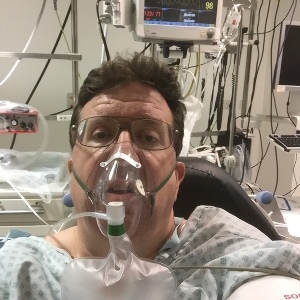


Comments