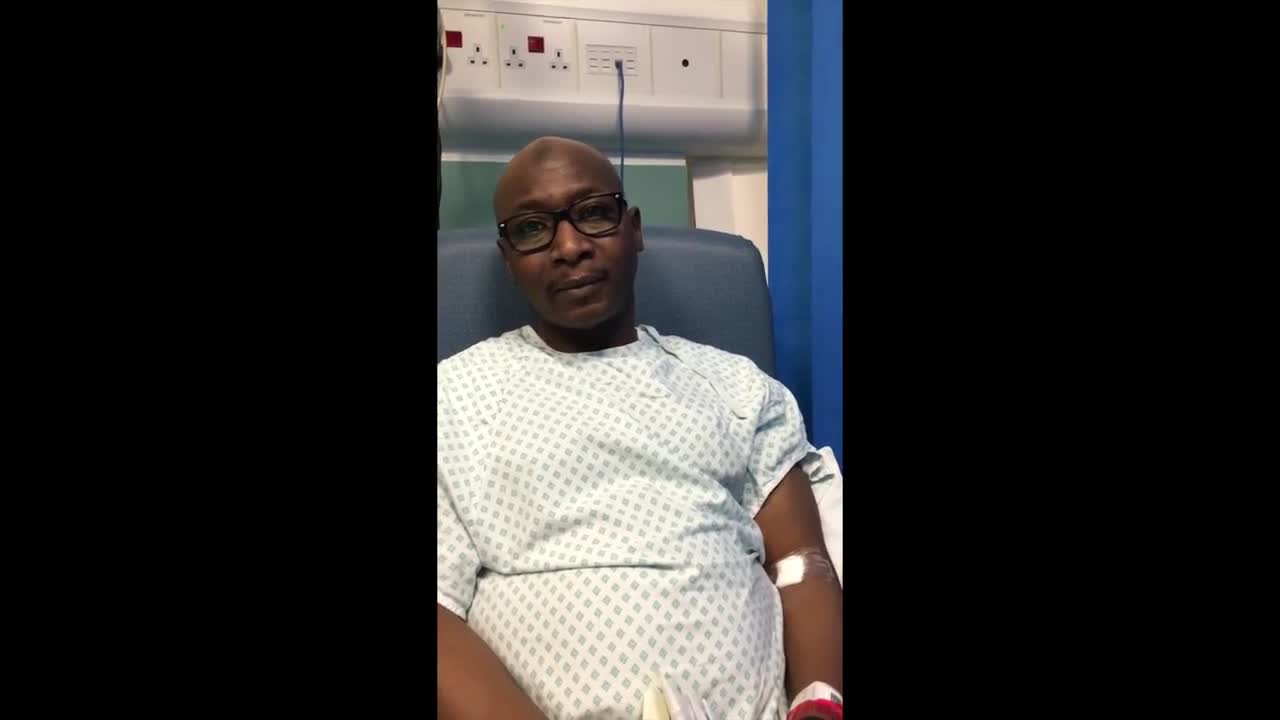
Only 5-6 days after cardiac surgery which fixed his Aortic Stenosis, Mitral Regurgitation and Tricuspid Regurgitation, he kindly chats through the high and lows. It all about getting the timing of surgery correct. Not too early and not too late.
Transcript (auto-generated)
This transcript was generated automatically and may contain errors.
So hi, so thanks very much for agreeing to talk about your surgery. So obviously I've been looking after you for over 10 years. Tell me what it felt like when I said, look the time has come to actually have an operation. Well I was scared and I was concerned because I knew that it would be a big operation on the heart. And in terms of how we built you up for that, what tests did you have in advance of having the surgery? I had masses of tests. I had an angiogram, I had an MVO2 and I had your assistant gave me lots of, which he'd had before, what I would call bicycle tests, tests which you said were crucial for finding out I don't know what but I had the vital tests and then I had some camera work and I had a camera on my I had a x-ray I had an x-ray as well yes so let me summarize that so what you've had done is an echocardiogram from the outside of your chest and then the the telescope test the camera that you swallowed you looked at the valves in detail that's called a transesophageal echo. You obviously had a chest x-ray and all of those tests showed that you had some quite severely leaky and narrowed valves, but the timing of surgery, because you really were feeling very well, was decided by the fact that your MVO2 exercise test would have guided us to see how much tolerance you had in the system. Now of course the conundrum here was that you also needed orthopedic surgery with both your hips being done. Yes. So part of your exercise limitation is because of that. Yes. So that took you to the point of surgery. Then I introduced you to Mr. Kasula, who's an excellent surgeon. And so what did he quote you about the risks of surgery? Well, I remember the figure 5% and I thought, well, actually, that's pretty good because a lot of surgeries, there's a 5% risk. But it doesn't really mean 5 out of 100, it just means that 5% of the total operation is done. So I didn't worry about that. Well, there's no alternative. You're in a TINA situation. There's no alternative. Once you start down the road, once I met Mr. Kasula, Kasula, I really just did whatever I was told. That's probably a good thing because the doctor's usually right, but of course you need to be involved in it. And Mr Kasula's 5%, as with all surgeons, is a 5% risk of not making it through surgery. On top of that, of course, there is the risk of wound infections, of strokes, of heart attacks, of rhythm problems, all of which obviously are not quite as important as dying during the surgery. Good news, you haven't died during the surgery. The surgery's been very successful. So tell me about the days after surgery. So you woke up actually on the day of surgery. I saw you in the intensive care unit. So how's the next few days been? Because it's four or five days after surgery now. Well, I had the added complication of being asthmatic. And I was coughing. And that was painful on my heart. But I could control that. And again, although I am not unconscious, I'm conscious, you're in a situation, and I find in life, if you can't influence things, I just go along with them. So I was quite happy to go along with just whatever, because the nursing is superb. And the nurse you have, each nurse only has two or three patients to start with. And they're looking after you all the time. You've got cables sticking out of you all over the place. And they're monitoring that carefully. So you know, and incidentally, you're also being filmed all the time. So the nurses see you all the time. So they may not come immediately when you put the buzzer on, but they know what's going on. So I was sort of conscious but not conscious. I was not trying to be alert. I was sleepy. So on the first day certainly you were sleepy because the painkillers were very strong. Oh yes. Did you have a period, I usually tell patients that on day 3 or so you're going to have a dip because you've worked out that you're alive and you're comfortable with that, but then it begins to hurt because we start winding the painkillers down. Did you have a dip on day 2 or 3? Well yes I did. I started to feel my family weren't interested in me anymore, and we got a bit depressed about that, which they said, of course, was so totally stupid. But I did feel that, and I thought, there's no way my wife's going to stay with somebody like me any longer. But then you pick up, and then the marvellous thing, you find you can walk with a xenophrene, and you have a physio, and they've got very good physios here, one chap called Robin, he walks with you, he's a bit of a tartar actually, he pushes you on, but that comes from day three or four. And then you really make great strides, like today I'm day six I guess, and I'm seven, no six, and I'm feeling that I could, if I had to, I could walk out of this hospital on my own. I feel I could do it. And I think you probably could, obviously we've adjusted your medication now that the pain is under control and you're on the right pills including warfarin, which you'll have for a short period of time after this valve procedure that you've had. So to summarize, your recovery's been very good, it isn't over of course, you'll be recovering at home, you'll be going home in a day or so and you'll be receiving rehab at home so that the exercise program continues, we don't forget about you when you go out of hospital. And then, of course, you'll be seeing both the cardiologist, me, and the cardiac surgeon, Mr. Kasula, for follow-up, him to check your wounds are fine and me to make sure your heart's as strong as it can be. And of course, once all of this is done, that sort of cures your heart, and then we'll get round sometime in the new year to sorting out your double hip operation that you actually need so we can truly make you bionic. Yes, and you think it would be alright doing those hips together, the two together, because as you say it halves the chance of something going wrong in not having them at separate times. So I think the answer to that would be yes, the orthopaedic surgeon is pretty keen on having both hips done together, as long as the physiotherapy works with both hips at the same time. Hip surgery is much smaller than knee surgery, and some people would do both knees together, think that's much more sporting. Hip surgery actually I think is much easier to achieve and you only have one anaesthetic then so the risk to you now with a good heart will be just the simple part of the anaesthetic with your asthma and if we can have only one anaesthetic although it'll be a little bit longer that is probably going to be safer than having two separate anaesthetics with a bit of recovery in between. So when we get you out of hospital we'll get you better and then get you to the orthopedic surgeon as well and make you the fully bionic man. Well you've done great doctor. Iqbal I've known you all these years and each year you said let's wait it's all going fine let's wait and of course you said surgery techniques have improved in the last 10 years and so it's obviously been right to wait and I've had your ECGs every year And now the operation's done. It is, and so you've had your aortic valve replaced, your mitral valve repaired, and your tricuspid valve repaired. Thankfully, you didn't need a bypass operation, although while the hood's up, if it had been needed, he would have done that as well, but it wasn't needed. So congratulations and thanks for talking to us. Good.

 Health Shared



Comments