Welcome our new speaker, Mr Adam Gwozdz. Adam is a Clinical Lecturer and specialist registrar in vascular surgery at Imperial College London and a research fellow in venous thromboembolism .
In the podcast Adam discusses the process on the development of patient centred outcomes specifically for people with venous thromboembolism.
Transcript (auto-generated)
This transcript was generated automatically and may contain errors.
Hello everyone, my name is Adam Gwads and I'm currently a clinical lecturer and specialist registrar in vascular surgery at Imperial College London in the UK and a research fellow in venous thromboembolism at the International Consortium for Health Outcomes Measurement. And I want to thank the Lindsay Light Club for inviting me to give a podcast on the process of developing patient-centered outcomes specifically for venous thromboembolism. I'll refer to venus thrombolysm as VTE throughout the podcast, and we know that VTE is an increasingly prevalent clinical and public health problem. VTE is associated with adverse health outcomes, poor health-related quality of life, and high health care costs, and currently significant variation exists in VTE care and treatment practices between institutions and countries across the globe. And there remains no single internationally accepted standardized approach to reporting outcomes of care in VTE. So a lack of a standardized approach hinders our ability for routine monitoring of patients and benchmarking of different clinical practices. And a fully standardized approach would include both outcomes that are important to patients that are measured, as well as the process of measuring them and recording them. So ICHOM, which I mentioned is the International Consortium for Health Outcomes Measurement, is a nonprofit organization that was co-founded by professors Michael Porter from Harvard Business School and Martin Ingvard from the Karolinska Institute, alongside the Boston Consulting Group, which supported the development of standardized outcomes, and in particular VTE for integration into routine clinical practice. They helped convene an international multidisciplinary working group of 31 clinicians, scientists, and patient representatives from 15 countries. Now the aim of the project was to propose a standardized set of outcomes for venous thromboembolism that included patient-reported outcomes and case-mix factors for comparisons across different treatment modalities and institutions worldwide. Potential outcomes for consideration to include were sourced from three key domains, existing ICHOM standard sets that have been published in the past, international patient focus groups to ensure that patients' views were incorporated into the consideration, and literature reviews of existing registries. Now, ICHOM to date have published 33 disease-specific standard sets. And in particular, these included cardiovascular disease states, and we included those outcomes that were universally included across those standard sets. In terms of patient engagement, we carried out international patient focus groups and included outcomes that mattered most to patients. Some examples of outcomes that patients included were quality of life, stamina, such as including the ability to exercise and have mobility, general function, which included activities of daily living, breathing difficulties in the form of shortness of breath, fatigue and energy levels, which included the ability to have spare energy on activities besides activities of daily living, social functioning and role functioning, mental and cognitive functioning, and recovery and rehabilitation in the form of including alignment or aligning expectations in time expected for recovery. Now, from the literature review, we ended up screening both outcomes and case mix variables that were previously included and published studies and registries. We identified 1,004 articles from our search and included 188 articles for assessment of outcomes based on our inclusion and exclusion criteria. logic was carried out over a one-year period and included a three-round Delphi consensus that covered outcome domains, their definitions, and appropriate measurement tools, as well as relevant case mix variables. And so outcome selection was performed online. So following each working group video conference, all working group members were required to vote. The consensus process followed very much a standardized approach, and the results of each vote were reviewed by the working group during the subsequent video conference. Inclusion in the standard outcome set required at least 80% of the working group to vote the item as essential, best instrument, or relevant case mix variable. And that represented the highest score on the scale that we use. Now outcomes and case mix variables were excluded if at least 80% of the working group members voted in item is not recommended, so having a low score. And all inconclusive outcomes were voted on in the final third round with 70% consensus required to ultimately be included in the standard set. This ensured that the outcomes selected were essential for VTE. So and for the first time I'm very excited to share with you a summary of of the finalized outcome set, which included 15 core outcomes that were grouped into four domains, which are patient-reported outcomes, long-term consequence of disease, disease-specific complications, and treatment-related complications. So for patient-reported outcomes, we've selected quality of life, functional limitations, which is including the ability to work, pain, which includes symptom severity, shortness of breath, which again includes symptom severity, satisfaction with treatment, psychological well-being, and changes in life view. For long-term consequences of disease, we've highlighted healthcare resource utilization, thromboembolic pulmonary hypertension, chronic thromboembolic pulmonary disease, and post-thrombotic syndrome. For disease-specific complications, we've highlighted recurrence and survival. And finally, for treatment-related complications, the outcomes were bleeding and procedure-related complications. Now, for patient-reported outcomes, we've identified a measurement tool package that captures our core outcomes and includes a cascade opt-in system if more detailed measurements are required. So, our core set includes the PROMIS Global Health Questionnaire, PEMQOL, VAINSQOL, and a single item post-VTE functional status scale, along with a question on treatment satisfaction and changes in life view. So this ensures that a minimum number of items captures all of our core outcomes. So this ensures that we'll be able to implement it into clinical practice for our patients. The Cascade opt-in system that we've developed, it allows further assessment if required. And this includes questions on pain, dyspnea, anxiety and depression, and treatment satisfaction. And this is part of the assessment if these areas are highlighted from the previous questionnaire. So for clinical outcome measures, data is sourced from clinical diagnoses and hospitalization records. So next, we wanted to identify case mix variables that allowed us to create a risk adjustment model, which takes into consideration the effects of different risk profiles that impact outcomes when compared across different populations. So we've identified factors including demographics, baseline health status, and treatment related factors that we found impact on the outcomes we included in our core standard set. So the reason why case make variables are important is that we need standardization so that we can meaningfully and reliably compare the same outcomes. So the demographic risk adjustment factors that we've selected through the Delphi consensus were sex, race, ethnicity, BMI, age, and education. And the clinical risk adjustment factors included comorbidities, the anticoagulation used, history of previous VTE, and specific treatment interventions undertaken. The time points that we recommend capturing this data includes during the index event, so at baseline, where we capture patient reported outcomes, clinical outcomes, and case mix variables, but exclude those that are related to disease progression or treatment, since this hasn't occurred yet. The full set of core outcomes are then measured at three months, at six months, and at one year, so that they can be compared across different time points. So in summary, we've developed a consensus recommendation for the standardization of a minimum set of core outcomes that are most important to patients with VTE, and they comprise long-term consequences of disease, complications of treatment, and patient-reported outcomes. This recommendation is targeted for integration into routine clinical practice and in research so we can standardize the outcomes that we measure and ensure that we're always looking at the outcomes that matter most to patients. And the use of the standard set may enable institutions to monitor, compare and improve the quality of care for patients with VTE. Now, these outcomes are published on the ICHROM website. So you can have a read through of the outcomes in more detail and how they were selected, including the various definitions that we use for the outcomes and how they'll be measured. So again, I'd really like to thank the Lindsay Leg Club for giving me the opportunity to give a podcast on this topic, which I think is extremely important to ensure that we continually get patient input in what we measure. And I think the other important thing about these outcomes and what we've seen with previous outcome standard sets is that as we start targeting specific outcomes for patients, those outcomes improve and they actually may become less important in the sense that they're addressed and we see improvements in them and we may need to target others that have been identified as being areas of concern. So these outcome sets are updated on a yearly basis through patient involvement and engagement as well as through sort of ongoing literature reviews and so on. So again, visit the ITROM website. I'd be very happy to be contacted directly if you've got any concerns or want to be involved in any sort of discussions or sort of patient engagement activities at Imperial College London. And I look forward to doing something like this again. Thank you.

 Health Shared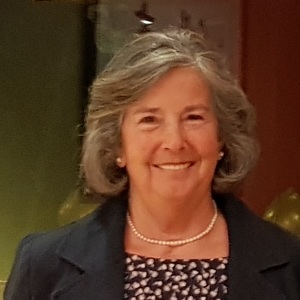


Comments