A very interesting talk from Robin Franklin, a retired lecturer.
Robin talks about the influence of art, what is art exactly, what is it for, what does it do?
Transcript (auto-generated)
This transcript was generated automatically and may contain errors.
Hello. My name's Robin Franklin and I like to talk about art, whatever that means. That's the thing though, isn't it? What does it mean? What is art exactly? And what's it for? What does it do? I suppose you could say it's a form of communication. It might be a painting or it might be a piece of music or pottery or a film, a play, a meal, a photograph, a dress, a sculpture, a garden or a poem. But what does it do? Well, does it please or shock you? Does it make you laugh or cry, and does it touch a nerve for you, although you don't know why? And does it lift your spirits if you're feeling sad and blue, or does its overwhelming beauty tear your heart in two? We don't have to understand, as long as we take heed of what it seems to say to us that satisfies our need. So it's not just a way of looking or listening or touching, but of really seeing, really hearing, really feeling. Art, whatever it is, should help us to do that, to help us see things from a different viewpoint, to see things, anything, everything, as a work of art. And that can inspire us to be creative. Maybe pick up a pencil and draw something, anything, whatever's in front of you. It's only when you come to draw something in front of you that you really have to look. But you don't have to draw or paint. Learn to play an instrument, cook a new dish, make something, write something. Use whatever skills you have or don't have and whatever materials are to hand and create something. Let it absorb you. Enjoy the release of being totally lost and absorbed in it. Don't judge it. Stay open-minded. Bask in the warm satisfaction of having created something original and unique. It's part of who you are. Enjoy it for what it is. Whether you're creating something yourself, looking at, watching or listening to someone else's creation, do it with a big heart and an open mind, and you will be the richer for it. For if every now and then you are able to experience little bits of this extraordinary world in which we live as multi-century works of art, well, it can just blow your mind. Back in the days of vinyl records and LPs, you remember those, I'm sure, people were obsessed with their hi-fi, the record deck, the amps, the speakers, just listen to that bass response, oh, the clarity of that treble. Well, one night there was a thunderstorm, and I remember standing in the garden, watching and listening as the lightning ripped the sky in great tears and flashes, and thunder cracked and detonated and shook the ground, not a hint of distortion, and as clean and sharp as a diamond blade, and the power, wow! And I thought, if this was someone's hi-fi, you just wouldn't believe it. What a performance! Yes, of course, the technicalities of sound reproduction, playing an instrument, colour theory, the structure of poems, harmonies in music, the science of cooking, it can all be fascinating stuff. And our natural curiosity drives us to want to understand, to ask, not just the little questions but the big ones as well. So many things we want to know, like whence we came and whither go. But these are not important now, as what we need to know is how to touch, to taste, to hear, to see, to think, to love, to live, to be. Not only is art the process of creating things, but it's also a way of looking at things, and at life. Yes, I know, I know, life's busy, hectic, distracting. You can't be an artist all the time. But as the actor David Carradine said, if you can't be the poet, be the poem. Because you, yes, you, you are a work of art. You are. You're an original. You're unique. There is not another one like you in the whole wide world. There never has been and there never will. There is only the One You. So look after yourself.
 Health Shared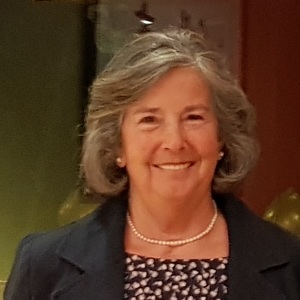


Comments