Listen to Abdul Seckam's third podcast for the Leg Club Channel.
Abdul will be talking about 'To sing or not to sing, that is the question'.
Transcript (auto-generated)
This transcript was generated automatically and may contain errors.
Hello, my name is Dr. Abdul Sekam and I'm the Stroke Research and Innovation Manager for Stroke Hub Wales. Welcome to this episode of the Leg Club podcasts. Today I'm going to present on to sing or not to sing? That is the question. Various studies demonstrate that community singing improves well-being and also supports social interactions. The Stroke Association's Life After Stroke groups provide various programs such as the Strike Accord Choir for stroke survivors and their carers, however, the COVID-19 pandemic has had a profound impact on the way stroke care is being delivered, including the delivery of these choirs. Due to government regulations during the COVID-19 pandemic, stroke survivors were required to self-isolate with previous in-person choir programs transitioning to virtual choirs and delivered over online platforms such as Zoom, Teams or Skype. While there are social benefits to virtual choirs, they provide different experience compared to light choirs, but nevertheless be effective at supporting those who are self-isolating or are isolated. The aim of this qualitative study was to explore stroke survivors' experiences and perceptions of singing, or choosing not to sing, in a virtual choir during the pandemic. So a qualitative approach was adopted, eight participants were recruited from the Stroke Association Strike Choir, and semi-structured interviews were conducted, and verbatim transcriptions were analysed using thematic analysis according to Brown and Clark 2006. Questions were carefully considered in light of the participant's situation due to aphasia. The thematic analysis was conducted to evaluate choir members' experiences, perspectives, views, impact of and identified themes in relation to partaking in virtual choirs. Three main themes and respective sub-themes were identified. So these themes included experiences of singing in a choir, virtual choir and me, and yearning to sing face to face. So if I can give you some representative quotes of the various themes. The experience of singing in a choir. As one participant explains, I really enjoyed it. I really like seeing everybody saying hello and having a laugh and stuff like that. For the nature of the experience, most participants love singing because they felt free, being able to learn to improve health, to help with mental well-being and to help with aphasia. For theme two, virtual choirs and me, a sub-theme of the virtual choir platform in relation to the community. As one participant explains, Zoom has been the easiest out of all of them for me to use. The virtual choir also provided a sense of belonging, community. I mean to say it has got people together and it has got other choirs involved. I think it has been very useful for getting people together so people know they are not alone. For the third theme, yearning to sing face-to-face. As one participant account explains, I think it's good. I didn't realize this long. I miss face-to-face. For one day hopefully we have both virtual and meet as well. That would be amazing. Another participant, when you were in the music hall we were just sing as a choir, it would be a lot better if we were down there. So for most stroke survivors, they embraced the Zoom platform and they welcomed the use of this innovative technology for singing practice, which provided a sense of belonging and a way to still be a part of the community to combat social isolation. However, stroke survivors also expressed a longing to facing face-to-face and the difficulties presented by using virtual platforms. So these experiences and perceptions highlighted by stroke survivors offer important insights for those who facilitate these groups and provide a platform for social interaction during the global pandemic, thus addressing social isolation issues, and may also offer an insight to those that may struggle with communication and digital literacy. For the full publication, please visit the British Journal of Neuroscience Nursing, October 2021, volume 17, number 5. Thank you for joining me and goodbye.

 Health Shared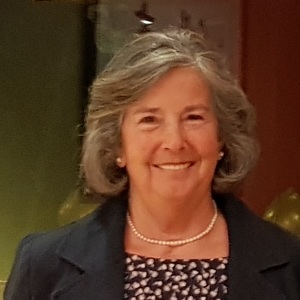


Comments