Mr Simpson had an Endovascular Repair of an infra-renal Abdominal Aortic Aneurysm (AAA) known as an EVAR. The procedure was complication by blood clot travelling down a leg artery resulting in some gangrene of the tips of his toes. The gangrene was limited in amount and Mr Simpson made an excellent recovery with his aneurysm repaired.
Transcript (auto-generated)
This transcript was generated automatically and may contain errors.
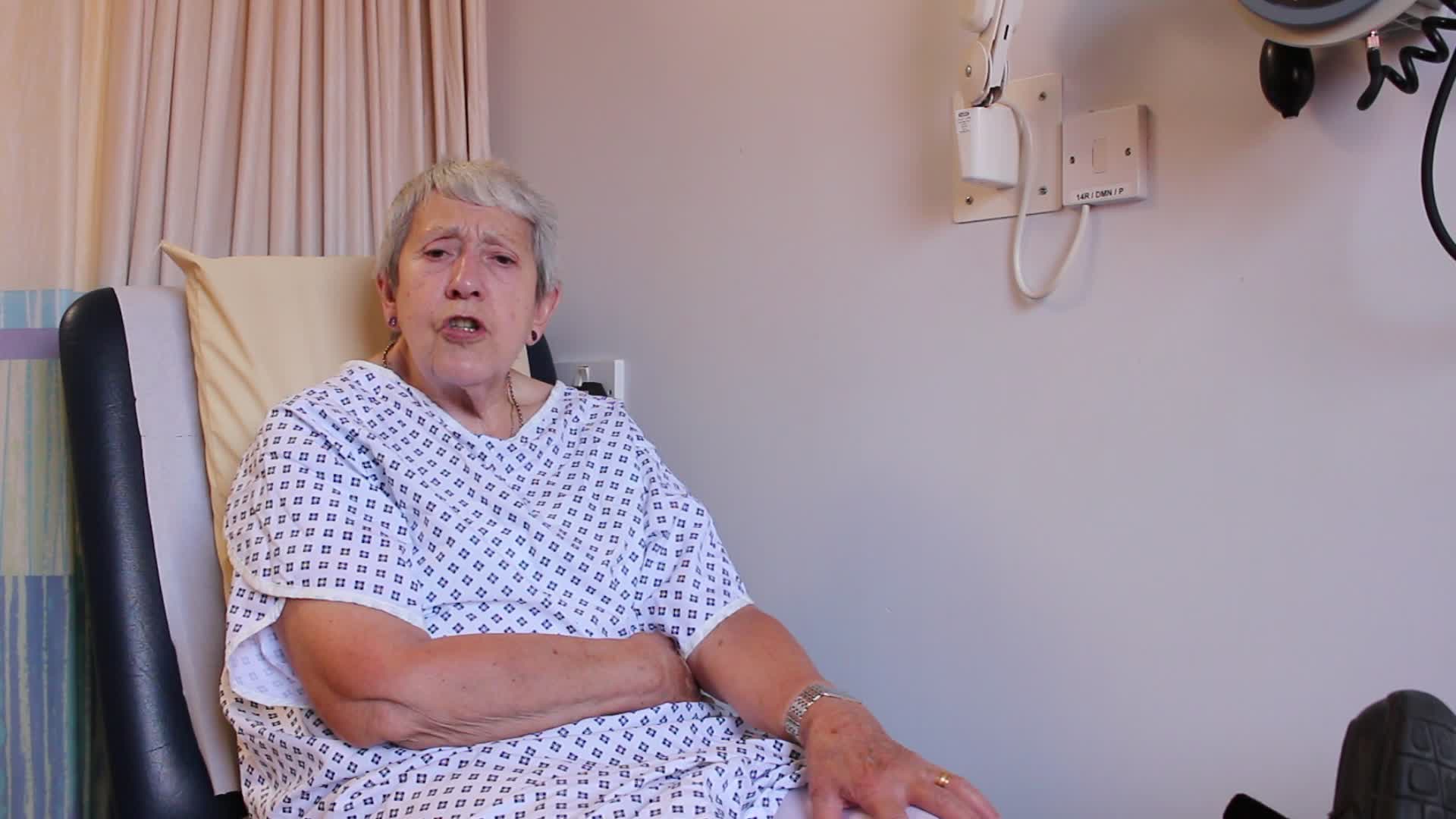
Okay, my name is Roy Simpson. I'm 77 years old. We did an aneurysm repair for you, didn't we? Yes. Using the keyhole technique, the endovascular aneurysm repair. That's correct. And that went all very well. But in the process, some blood clots went down your leg into your foot. That's correct, yes. If you could tell us a bit about that, what happened to your foot? Well, the blood supply down to my foot caused part of my foot to die off. There was no blood supply. The toes became necrotic and extremely, extremely painful. But, when I had the operation, it was virtually painless after the operation. There's a bit of complication with the operation that we don't normally get. But sometimes, if we try to repair an aneurysm, swelling in the arteries like you have, and there's a clot around, or atheroma, which is a narrowing of the arteries around in the location we're trying to repair, When we inflate the inner tube repair, so to speak, the endovascular repair, a bit of the lining of the artery would break off and go lodged in your foot, that's exactly what happened. I think it was pretty much unavoidable in your case because you had your operation as pretty much an emergency, and it was a life-saving operation because your aneurysm was rupturing. But the foot then became a problem. We thought the butterfly would be good down to your foot and things would heal themselves up after the toes had separated themselves. But even after that, the healing wasn't so good, was it? No, it wasn't. And we saw you in clinic and we scanned your leg and we found there was an arrow in the artery in the groin, which may well have occurred from the first operation. To put the aneurysm repair graft equipment up into your tummy artery, we had to open the arteries in the groin, and I think those arteries, when they were closed, they were narrowed on the side that you had the problem in the leg. So we did another operation later on, didn't we? Yes. You made a cut in the groin and removed the narrowing and put a patch over the top to widen the whole area. Yes, bovine patch. Bovine patch is active again from cows, the lining of their heart. Oh, that's interesting. But tell us about how that procedure went for you. That went very, very well. I was in hospital altogether. 8 days altogether. There we go. Virtually no pain after the operation. My foot was still sore but I had to deal with that to see the operation. I've got slight numbness that I was warning about down inside the thigh. You can get that from when you make the cut to artery can damage a nerve that's right in that area of the thigh and it can become numb. Yeah, but that's no problem at all. I thought it would be number that it is. Both the operations went absolutely fantastic. If it wasn't for the foot I wouldn't have known I'd be in hospital. But now the foot's healing up nicely. It's not painful, but it's getting there, you know, 10 times better. Anything I expected to happen in your experience that you want to tell people about? I was pulled off a sailboat. Lucky enough that the paramedic, when he came to see me first of all, the ambulance, he said to the ambulance people, take him to St Mary's, as fast as possible. You picked up on the fact that you had an aneurysm, swelling in the artery, in your tummy and everything, that was the first thing. Yeah, throbbing mass sequelae. Throbbing mass, exactly right. Right. In a nerve-wracking time, but hopefully you're out the other end. Yeah. Right, thank you very much for speaking to us. Okay.

 Health Shared


Comments