Sanjay Perkiasta, a consultant general upper GI, bariatric, and laparoscopic surgeon, discusses appendicitis and its surgical treatment.
Transcript (auto-generated)
This transcript was generated automatically and may contain errors.
Hi, my name is Sanjay Perkiasta. I'm a consultant general upper GI, bariatric and laparoscopic surgeon based in central London at St. Mary's Hospital and at the Lindo Wing and at the Wellington Hospital at St. John's Wood. I'm going to talk to you today about appendicitis and what surgically needs to be done if you have appendicitis. This is a common condition and we see it week in, week out as a general surgeon. It usually presents with diffuse or generalized abdominal pain, and a lot of patients feel they have symptoms such as indigestion, an upset stomach, or gastroenteritis. But when this pain settles more on the right-hand side of the abdomen and becomes constant, this could be appendicitis. If this is the case and things are not settling on their own, please do contact us, as you'll need blood tests, and usually at least an ultrasound scan to help you with your diagnosis. Once this has been confirmed, we can carry out a keyhole procedure, which is called laparoscopic appendectomy, to remove an inflamed or infected appendix. This usually takes between 30 to 60 minutes, depending on the complexity of the case and how nasty the appendicitis is. It involves three small cuts on the abdomen, the smallest of which is about five millimetres, and the largest of which is about 10 millimetres, so it's around one centimetre. With these three cuts, we put a camera and two instruments into the abdomen and remove the appendix. You do not need your appendix to have a normal or good quality of life, and in fact, there are no real functions for the appendix for normal human digestive function. What are the complications? Well, these are few and far between, but they can include a small risk of bleeding, infection, pain, hernia at the sites of the surgeries, although all of these things are extremely few and far between. There is also a small risk of getting clots in the legs or lungs as with any other surgery, but all of these sorts of risks are reduced by the way we carry out the procedure, the fact that it is carried out minimally invasively, and the majority of our patients get back to normal work and life and exercise within a few days to a week. So if you have symptoms like this or you're interested in learning more about acute appendicitis or laparoscopic appendectomy, please do get in touch either by phone or on our website or email and we'll be happy to deal with you in the most convenient way for yourself. I'm Sanjay Purkiastha and I'm a consultant general surgeon.

 Health Shared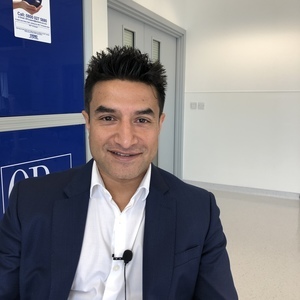


Comments