Surgical ConsiderationsPatient Impactankle fusionankle replacementankle jointkneemidfoot jointssubtalar joint
What is included in the ankle fusion tecnique?
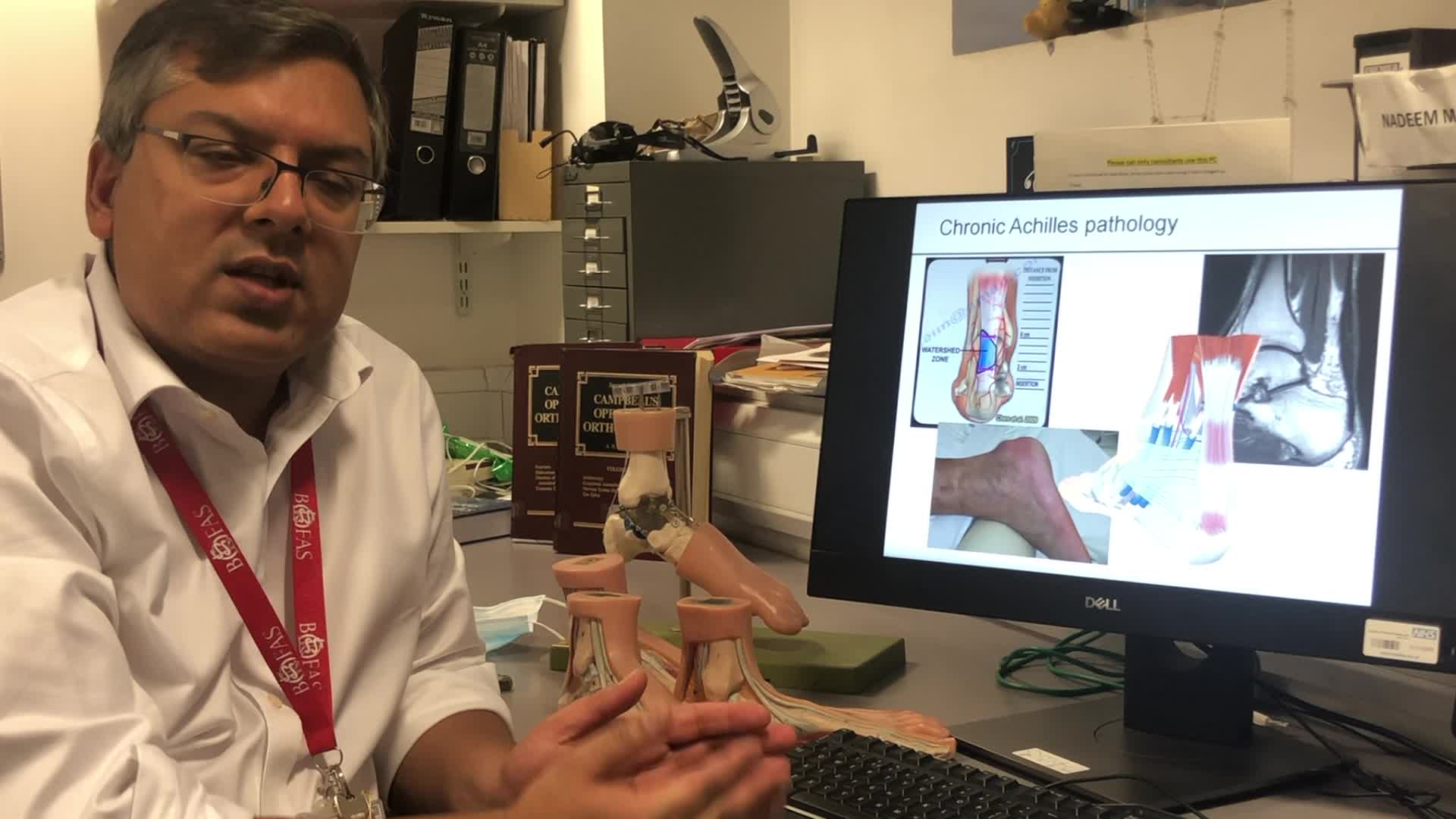
This video discusses the types of ankle fusion available, risks, benefits, and complications associated with fusion after an ankle replacement.
Transcript (auto-generated)
This transcript was generated automatically and may contain errors.
One of the ways we can do an ankle fusion is by opening up the ankle joint, preparing the two ends and putting two simple screws across it. A more complex way which can be used in severe deformities is to put a rod and screws in to fuse the joint. This obviously results in more stiffness whereas this one spares more joints so you have better movement although the ankle joint will be fused. The problem with the ankle fusion is that they do lose some movement but it is very good for pain and it is still the gold standard. an ankle is fused the patient should not have any further pain and it should last forever. The only downside of an ankle fusion is that you start putting excess stress on joints around the ankle so the knee may be affected or joints further down such as the subtalar joint or the midfoot joints may be affected and they start to wear out in the future. On the flip side I mean the ankle replacement does not affect other joints but there is no guarantee that it is going to last and if the ankle replacement fails after 7 years or 10 years what do you do next? The patient may then have to have an ankle fusion and it would be a much more complex procedure because once you remove an ankle replacement there's going to be a big gap where the ankle replacement was sitting and therefore it becomes a very complex procedure. So there are pros and cons of both ankle replacement and ankle fusions and it's something that you need to discuss carefully with the surgeon before proceeding with either.

 Health Shared



Comments