We welcome two new speakers, Ruth Yeoell and Susan McGloin who currently work for 3M one the Lindsay Leg Club Foundation Industry Partners.
Ruth and Susan both have vast experience in vascular nursing, they are discussing the role of the clinical specialist in industry. Part of their roles are in increasing clinicians’ confidence in wound care scenarios and how both industry and clinicians learn from each other.
Transcript (auto-generated)
This transcript was generated automatically and may contain errors.
Good morning Susan and welcome to today's podcast and before we begin I must say thank you so much for joining me before your working day even begins for a chat. For the listeners today's topic is the role of the clinical specialist in industry. My name is Ruth and I am joined today by my fantastic colleague Susan. A bit of background about us both, we both currently work for CM. I am the scientific affairs specialist for Northern Europe and Susan works within the clinical specialist team looking after the advanced skin and wound care portfolios. Our clinical background really is in vascular nursing and we have a vast experience in that and I think it's fair to say and you'll agree with me Susan we really do share a passion for lower limb disease and I think that probably brings me on to do you remember the first time we ever made. Well, isn't that funny? And good morning. Yes, I do indeed remember the first time that we met. And, you know, just there in your introduction, when you said about, you know, the passion that we have. And the first time that we met Ruth for our listeners was at Harrogate and I was passing the 3M stand and I noticed somebody in full flow doing a demonstration on somebody's leg. And who was it? Only Ruth. So that was my first introduction to you and sure as they say the rest is history. I'm so glad you remember that I must have been so full in flow that I can't remember you watching me doing that but the rest is history and I feel we've got to know each other extremely well in the last few years. But you then have moved into the commercial world after being a previous clinician and I suppose it brings me to the point or the question, how do you find working as a clinician in the commercial world? And do you think it really brings advantages to both industry and healthcare professionals? Oh, absolutely, Ruth, I do. And, you know, I've had this conversation with many a clinician over the years, and I feel, you know, that working in industry gives me the opportunity to continue to use my clinical expertise that I have developed over the years to use that within many different clinical settings and I'm sure you'll agree that sharing our knowledge and our expertise with our clinicians is so rewarding and you know we learn so much from them too. I think that we have a very important role to play in increasing clinicians' confidence in such a wide range of wound care scenarios. I think that's a really good point that you've made there, actually, Susan. And I think if we if we look at what's happening in the UK currently around the complexity of lower limb disease, and I think it's a prime example, those recent developments in the world of lower limb with that implementation of the National Wound Care Strategy is really huge. In all the years within vascular, I think this has been the biggest shift in changing the mindset of care of clinicians. the ability to apply compression before undertaking an APBI in a vascular assessment would have been unthought of a few years ago. It would almost be taboo to actually do that. But I think along with implementations, there's always a target, isn't there? And when it comes to national targets such as CEQIN, we're in a really good position to not only offer education but really support our clinicians in the creation of documentation that aids with audits and really it gives the end result of helping meet their local targets. Yeah and just to your point I suppose isn't it wonderful to see the progression and to see how the whole you know science and marketplace and everything is moving and it's so exciting to be working at the interface of that, you know, presently. But, you know, to the question, I suppose, I think this gives industry a great opportunity to work in partnership with the healthcare professionals to share this new guidance and help with the successful implementation through both education and utilising pathways to standardised care. We educate, I suppose, on appropriate treatments and solutions for improving patient outcomes. So standardising care stops those variables in practice, the many variables that we come across and in turn then it has a huge impact on healing and ultimately what the bottom line is, improving our patient outcomes. Oh I couldn't agree more with you. I mean really at the end of the day a patient's journey and improving that journey is what we're all here for and just to the point of the many variables, how many variables do we actually see in care and it's one of the most frustrating things I think in clinical practice really is that variability and you know I think everyone loves direction from a pathway perspective. We really like to feel that you know we're following a pathway and we want to feel safe don't we and we want our patients to feel that we're giving them the best care. And I think a pathway can really aid that. And I think, you know, when you think of, you know, your background and the clinical skills that you now possess within industry, do you think having that clinical background has really enhanced your relationships with your healthcare professionals that you meet on a day-to-day basis now? Oh, for sure, Ruth. Like, I feel like as clinicians ourselves, we can have those conversations on a different level to those with a non-clinical background. You know, invariably, I suppose, we've walked the walk and talked the talk, you might say. But we have, I suppose, that empathy with our clinicians. Like we've said already, we have our patients' best interests at heart. You know, we've been there, we've walked in their shoes, we've been on the vascular units, we've been in the clinics. We know the challenges that they face and we relate to them in such a real way. And I really feel from lots of perspectives, it's so pertinent to have that clinically relevant experience to share in this arena. Within, I suppose, our organisation, we have this philosophy, science is our pursuit, improving patient lives is our focus. And as a clinician, This makes me really proud to work for an organisation that has this ethos. I feel, or I like to feel, that we don't have customers, that we have more partnerships with our fellow clinicians. Oh, absolutely. And what a fantastic philosophy. Science is our pursuit, improving patient life is our focus. I mean, I really think, on parallel, from a clinician to industry, that really aligns beautifully and brings us together and you're right, we become a partnership then. And I think improving patients journey is huge. It's really important to us. And I think playing a part of that and improving the patient experience and looking at the potential and positive outcomes is always at the front of my mind when I'm talking to clinicians. I feel really strongly about patients having key involvement in their care. And I'm sure you've heard my mantra so many times now that knowledge is power. And I really believe that educating patients is equally important as educating the clinicians that we do day in, day out. And I think some of the examples that we use when we're trying to educate patients through industry partnerships is that patient passport, you know, to allow that alignment of and transition of care from the acute to the secondary care and give that patient that autonomy and that empowerment to actually hold their own passport that gives them information, their treatment plan. And I truly believe they should hold their treatment plan. They should be part of that journey. And I think patient information is hugely important, and it really does empower them to have a voice. And I think, you know, thinking about patient care, and now that you're not, you know, a full-time clinician, as we see, we always like to think we dabble still. But, you know, do you feel that it's been important since leaving that full-time post that you keep in touch with what's happening within health care? Oh, for sure. And for me personally, this is something that I'm convinced is so important in our job role as a registered nurse. I had to adhere to the NMC code of conduct and be seen to be ethical, you know, always being there as a patient advocate. And maybe was not being at the bedside necessarily. Now, I feel that as a clinician working in industry, We still have that duty of care to ensure that any advice that we give is non-bias and evidence-based. Oh, absolutely. And I think, you know, working within an industry partner that we work in at present, you know, must be really reassuring that they have their own code and, you know, are really proud to be one of the most ethical companies globally and have had awards around this. I think it's good to see that some of the aspects of our company code really do mirror some of the NMC code of conduct. You know, I'm thinking, for example, that unwavering integrity that we talk about. Yeah, for sure. You couldn't be more right. So for me, you know, the short conversation that we've had, it sounds that you have, you know, transferred your previous clinical skills and you've transferred them, you know, seamlessly really into the commercial world and you're using them really to continue to improve patient care through education, supporting your clinicians and actually you now have an opportunity to share best practice far wider than you did when you worked as a clinician. That is so right and I really do believe that and I'm sure you feel the same Ruth. I find it just so rewarding that my job allows me to spend like my day talking about something that I love and I'm so passionate about. You know, I'm proud to share this passion and enthusiasm to ensure that our customers or our clinicians get the best possible support from industry to make sure that those patient outcomes are the outcomes that those patients deserve. I echo all of your sentiments that you've just said. And I think we really could talk about this all day and we haven't actually got into the nitty gritty of comparing some of our patients journeys. But I think ending on, thinking about that patient's journey, thinking about that improvement of care and thinking of why we're all here, whether we're a clinician or whether we're an industry partner, patients are the end point. And I think it's probably to finish on a patient is probably the right way to end this podcast. It's been an absolute pleasure to take some time, I see out of our busy schedules, but we've actually done this before our busy day starts. But it's been lovely to have a morning coffee with you and talk a little bit about our roles and passions. It's been really lovely. Thank you so much, Susan. And thank you so much to all the listeners of this podcast. Thank you, Ruth. It's been thoroughly enjoyable.

 Health Shared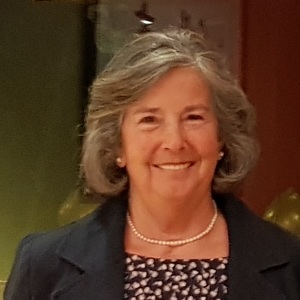


Comments