Listen to Lynn Bullock discussing Living with a long term condition. Lynn has Charcot Marie Tooth Disease and talks about the physical and mental problems facing people and also challenges how the health care professions view those with long term conditions.
Transcript (auto-generated)
This transcript was generated automatically and may contain errors.
Hello, my name is Lynne Bullock and I will be discussing living with a long-term condition and the effects this can have on your physical and mental wellbeing. Interestingly, I tried to research articles written by those who have a long-term condition to establish if certain parameters are the same irrespective of the condition one has. I discovered articles and research papers on how to manage your condition, what resources there are available, how to manage people, but not one article from someone actually living the experience. I now know how I should feel, how I should live with a long-term condition and the quality and cost-effectiveness of the care I should be receiving. All of this surely raises a number of questions. Is society not interested in hearing the challenges we face and how we feel? Are those with long-term conditions uncomfortable or even unwilling share their experiences. Does the National Health Service and those who carry out research realise that we are individuals with our own life stories and not just a number on a piece of paper? My investigation clearly demonstrates that there is very little awareness in the public domain of the lived experience of chronic illness. I should at this point say that I have Charcot-Marie-Tooth disease, one of the most common inherited neurological disorders affecting an estimated 25,000 people in the UK and 2.6 million people worldwide. I see myself as fortunate as my condition is, so far pain free and will not to my life expectancy. As my consultant said when confirming my diagnosis, be careful when you cross the road Lynne, as you walk so slowly you may be run over by a bus. I am delighted to say this has not yet happened. My condition was noticeable from childhood. I realised I was different from other children as I struggled to do what was called P.E. in my day. This resulted in low self-esteem, a lack of confidence, confusion as to why was I different and had I done something wrong. As an adult, people often remark that children can be cruel. My experience was that it was not the children, but the teachers who were the most unfeeling and uncaring. I can only hope that the teaching profession is more enlightened to children's needs in the 21st century, be they physical or mental. Often with a long-term condition, the physical and mental challenges go hand in hand. If you are having a bad day physically, struggling to walk, opening a tin or in my case not being able to put clothing on the washing line as your fingers are not strong enough, then your spirits go down along with your confidence and sometimes even the will to carry on. One of the side effects of CMT is my odd shape feet. I have tremendous problems purchasing shoes that fit and the older I am the worse the problem becomes. This is a physical problem but again has a knock-on effect on mental health. As a female you are conditioned as you grow up that the wearing of high heels is par for the course. A night out, especially a formal night, is nothing if not dressed correctly. My adult life has been spent trying to hide my feet, not showing them off. You get hardened to people staring, with some being rude enough to ask what is wrong and even coming up with some diagnosis which is never correct. I am fortunate in that the more mature I get the less I care what people think or say but for some this can be very upsetting. Fatigue is another problem for people suffering with long-term conditions. To give an example, you can feel so fatigued that you do not have the energy to even lift up an arm let alone put the kettle on. The challenges then are to feed oneself, to have a drink when even trying to get to bed is sometimes just too much. When you are first diagnosed you can often feel alone thinking you are the only one in the world facing these challenges but there are many support groups which people with long-term conditions can access. These can deal with physical and mental issues. In my case there is Charcot Marie Tooth UK which not only supports people of all ages including children who have CMT, they are also involved in research and have yearly conferences. I take heart that there may be a way of correcting faulty genes for the generations yet to come. Another excellent example of the support you can access is the Leg Club website which is a social model of care for people who have lower limb problems. This is a superb example of a website dealing with the whole person not only the leg. They have a variety of information such as tips on loneliness, staying healthy during winter, keeping your legs healthy and much much more. On a positive note we are fortunate that we live in an age where there are many gadgets on the market which can assist in everyday living. The device I have for doing up buttons is simple but amazing and has the added advantage of having a zip puller at the other end. My jar opener is an essential tool in my kitchen and needed to open the marmalade and a necessity for those of us who enjoy it on their toast. All these devices can be found online or in your local mobility shop. There are many companies which supply aids. The key is to identify your need and then start looking. These devices can make life a lot easier but never get captured by the research studies in long-term conditions. As someone with a long-term condition, I would suggest fear of the future can be overwhelming. Obviously, this is different for every condition and can be different again even for those with the same problem. What if I end up in a wheelchair? Where do I live? How will I manage my personal needs? What will happen to me? These are questions no one can answer, and I would suggest there are no answers as we never know how our lives may change. My way of dealing with the future is not to think too far ahead, but to try and get the most out of each day. To those of you who have long-term conditions, I urge you to keep going. You are not alone. alone. We may face different challenges in life, but life is for living and enjoyment can be found in simple things such as the morning chorus of the birds or the smell of cut grass. To those of you researching or writing about long-term conditions, I urge you to consider the importance of the lived experience of the person and the effect on the individual in your work. Finally, to the able-bodied, I would like to end by saying please like or dislike us for our personalities. We may look different, but we are the same as everyone else. We have good and bad traits. We have good and bad days. We can be happy or sad. In other words, we are all human. Thank you for listening.

 Health Shared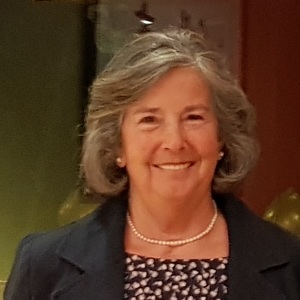



Comments