We are delighted to announce two new speakers, Megan Hunter and Kelly Buxey. Both Megan an Kelly are clinical trainers with medi UK.
Megan has worked in a Leg Club and Kelly has experience in setting up and running a Leg Club. The podcast is an interesting insight in to the views of Leg Club members (patients), volunteers and the nursing team.
Transcript (auto-generated)
This transcript was generated automatically and may contain errors.
Hello my name is Megan Hunter and I'm one of the clinical trainers at MediUK. I have some experience of working in a leg club. I had an honorary contract in a leg club in Essex where I volunteered once a week helping manage the patients. I'm just going to hand over to my colleague Kelly Buxy to introduce herself. Hi there yeah I'm Kelly Buxy and a bit like Megan I've got experience with running a leg club but I've also got experience with setting up a leg club so today is going to be a really interesting short chat for us to share some of that experience with you. And Kelly's also you're working at Medi now aren't you as one of the clinical trainers? Yep so my job title at present is clinical trainer and working for Medi UK. And we've been asked by the Leg Club Foundation to talk about setting up a leg club and trying to change patient's perceptions in relation to lower limb care. So Kelly you've obviously touched on there before when you introduced yourself why that you set up a leg club so I wanted to ask you why you actually decided to set up a leg club versus your kind of more traditional methods of treatment. Yeah, multiple reasons and benefits but just in a nutshell really I was lucky enough to go off and undertake my district nurse training in my previous role and part of that was undertaking various research and one of the pieces of research that I wanted to undertake and I looked into was the concordance rate around managing lower limb and in particular venous leg ulcer care and treatment and this highlighted sort of slow healing rates and also identified that within my particular area, 65% of that nursing time was spent on managing venous leg ulcers. There's a huge amount of research around benefits of how we manage leg ulcers and certainly the biopsychosocial element was an area that the modelling leg club allowed us to explore that area which could have been a reason there was non-concordance, slow healing rates. So the leg club model was a great model that I felt would be good to use within our area as we had multiple leg ulcer clinics with lots of patients. So that's why I then explored that through my training and was lucky enough to then return back to practice and actually set up and implement a leg club within my area. Kelly you touched on that biopsychosocial aspect of venous leg ulcer care for patients attending the leg club so what were the benefits that you actually found for the patients versus attending your leg ulcer clinics that you already had in place? Yeah so obviously touched on that element and one of the biggest elements for us was that social isolation that that we found patients had. And when they come to a leg club, they're not classed as a patient, they're a member, but they can interact and socialise with other members that are in similar situations because the perception is that some of these patients out there think they're the only person that have got this problem. So that social interaction with the clinicians that attended and run the leg club, but also the volunteers. We had great volunteers that would sit and talk play cards and games with some of our members while they were waiting for their treatment. Group education, what we would offer if there was a theme coming through that our members are asking similar questions or wanting some information on similar topics, we'd have a little group training session, so showing them how to apply and remove, so don and doff their hosiery and using different devices. One of the biggest benefits I feel is that learning from experience that patient experience that they can share with one another and I've got lots of stories I could tell you but that patient experience is so powerful to share. Yeah there was, you had a really good example once I remember you telling me about a patient and having a different coloured hosiery really made a big difference for her? Yeah that lady in particular for obviously confidential reasons I'll just refer to her as Jenny at the moment but yeah she really stands out for me and really summarises the benefits of a leg club versus a leg ulcer clinic. Jenny she was a lady who'd been coming to leg ulcer clinic for a very long time a couple of years and was that kind of revolving door patient which should come, we'd treat her, she would heal, she'd go into her bespoke made-to-measure hosiery. She then broke down and would come back. So when she returned once I'd set the leg club up she was invited to come to leg club, bit nervous in the beginning because she was only used to leg ulcer clinic but came, loved the service, the interaction with the volunteers and other members and this one particular day we'd got Jenny healed and she was sitting having her treatment and next to her was another lady who had hosiery and she had a pair of purple hosiery on the lady sitting next to her and I said to Jenny it's time to measure you for your hosiery and she said well why can't I have those colour hosiery you always give me those horrible sand colour hosiery, Laura Batty kind of hosiery. So I said, is that what you wanted? Well, that's why I don't wear my hosiery. I leave here and I have to wear these horrible hosiery. But if I had a nice bright pair of hosiery like that, I wouldn't be taking them off. And straight away, it was a bit of a light bulb moment, Megan, for me that, you know, we'd missed that element. The reason that she kept breaking down and was that revolving door was because she didn't like the colour of her hosiery. Now the powerful element that a patient or a member, sorry, sitting next to her had a different pair of hosiery on allowed us to treat her, heal her and she's remained healed to this day. And I think that's a trap we all fall in as nurses isn't it, we become very task orientated and sometimes we're looking at the leg and we forget about the person sitting in front of us and I think that leg club model really does open up that more, you know, the psychological, all the different social aspects of leg ulcers that we kind of forget because we see people in these very sort of sterile clinics where we're just dealing with wounds and we're not really thinking about what's going on, you know, in their lives and, you know, when they leave the clinic, whereas the leg club you get to see that a bit more and see them socially interacting with others and hear stories that they perhaps they wouldn't have time or be able to share with you as you know as their nurse but maybe more confidence to talk to somebody with a similar problem. Yeah absolutely. Yeah so you've talked about all the great benefits for the patients, why you set up the leg club and obviously your reasons for setting the leg club up in the first place but what benefits did you find as a service? Obviously I know your attendance in your leg ulcer clinics went down quite dramatically because obviously a lot of your patients were seen in the leg club so what benefits as a service did you actually find from from setting up your leg club? Yeah again multiple benefits and just a few to talk about again I've referred to it about that revolving door we really eliminated that revolving door of those patients breaking down and coming back with what could be then seen as a chronic leg ulcer so the healing rates improved the the breaking down rates improved because what we offered a member was always a member they never got discharged so if they had concerns they just returned back and usually it was just a bit of advice or support and there all their hosiery needed changing. The member obviously is there to still support and encourage that concordance with other patients. But one of the great advantages to us and the service, which is a national drive, is that real supportive self-care element. We're enabling these patients to be expert patients and self-care and self-manage their condition rather than just expecting a nurse to deliver that care and them not take ownership. So supportive self-care, self-care with relatives, friends, families, they would come and it was a huge benefit because ultimately it did reduce our visits. Initially we had huge numbers attending lead club clubs but our healing rates soon improved and there was more members attending for a social event rather than being treated which to me is a great example of what the lead club model can achieve if you if you really put that hard work in and set one up. Yeah well thanks for sharing your experience I think that will resonate with a lot of people hopefully listening and hopefully maybe inspire some others to you know review their lower limb services and see you know if they're not already utilising that Leg Club model you know where they could fit that into their services and thank you so much to the Leg Club for inviting us to host this podcast today. Thank you, take care. Thank you.

 Health Shared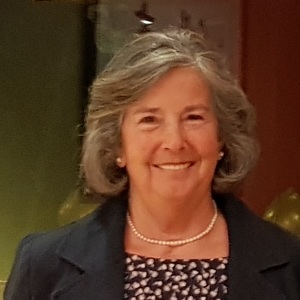


Comments