A warm welcome to our new speaker, Liz Hamlet who is a registered nurse and clinical support manager at Molnlycke Health Care.
On behalf of the Leg Club Industry Partners Liz is talking about understanding the role and function of healthcare industry clinicians within Leg Clubs.
Transcript (auto-generated)
This transcript was generated automatically and may contain errors.
My name is Liz Hamlet. I'm a registered nurse and my background is predominantly in district nursing. I left the NHS two years ago and now work for Merlika Healthcare, a Swedish company that manufactures surgical and wound care products. I'm a clinical support manager and along with a couple of colleagues cover the south of the UK. I provide training and education for healthcare professionals either on our products or on different wound etiologies which is completely non-product specific. I still practice in the community doing bank shifts for my local district nursing team a couple of times a month as I personally feel it's really important for me to keep my skills up to date and I really do enjoy and miss having that patient contact. I've been involved with leg clubs now on and off for about seven years and I know the impact that they have on their members, providing a social environment that is fun and friendly but also underpinning the unique partnership between nursing teams and the wider community. I live in a small city and my local district nursing teams ran two lead clubs, one either side of the river. There were so many members at the city side club that it ran twice a week with 40 to 50 members per visit so it really was big. It was fun and interactive and lovely to see the same faces there every week and the progress they were making, which was really evident on their faces and you could just tell by the way that they interacted. But on the flip side, you also knew if things weren't going so well for them or if their mood was low and it was a really good opportunity to listen and reassure and as nurses we really are good listeners. Everybody has a story in the past and I loved listening to them which was really quite humbling at times. We also ran a raffle every week as well which the members absolutely loved. There were only small prizes like ball bath or biscuits but the enthusiasm and joy that this brought was absolutely priceless and all the proceeds went to leg club so it was a really great way to generate funds and have a bit of fun at the same time. The reps joined us from time to time bringing lunch and all the nice things like chocolates that we knew we shouldn't eat but couldn't resist and it was a really good way of keeping in touch with them and finding out what the latest dressings were or any changes that were happening but sadly during Covid both leg clubs closed down as they all did and to date there are no plans to restart them which is a real shame. So now having experienced life on both sides one as a nurse within the NHS and now as a rep I can honestly say it's not just about selling a dressing or a product, quite the opposite really, as I want members to have the best experience possible with the best clinical outcomes and although the product is very important, education is paramount too and us nurses need to know the reason why we use a particular dressing on a particular wound. As a clinical support nurse, I visit hospitals, prisons, GP surgeries, podiatrists, tissue viability nurses, district nurse spaces, nursing and care homes, delivering educational sessions on subjects like pressure ulcers, burns, skin tears, diabetic foot ulcers, wound healing and leg ulcer management amongst others and I tailor make it for my audience, so that could be student nurses and healthcare assistants up to doctors and surgeons and everybody in between and wherever possible I like to make it interactive with quizzes and practical sessions but again Covid's taken it's told with some of the face-to-face sessions now having to be done virtually. However, this too has its benefits as we can reach a wider audience for when we do national events like Stop the Pressure All Today, Diabetes Awareness Week or Facebook Live events. It's just that I personally don't feel you can beat that face-to-face interaction, but that's something we've all had to get used to during this pandemic. It's also really satisfying talking to establishments and finding out what's going well for them and what's not going so well for them to see if there's a solution. So for instance if a certain hospital ward is seeing more pressure injuries than normal, can we assist with clinical audits, staff training on pressure ulcer prevention and a possible solution to reduce pressure ulcer recurrence, reducing nursing time and cost. We can also assist with writing case studies, protocols and pathways and quality improvement projects. So it's very much more than just selling a product. I'm really passionate about what I do because there's a member at the heart of all this and I'm inadvertently helping them to have the best care using the best most appropriate dressing which improve their quality of life, increase healing time and reduce costs. Over the last eight months or so I've been lucky enough to be part of a leg club in the south of the UK. It's a five hour round trip for me with a 6am start but worth it from the moment I arrive. I'm greeted by all the lovely volunteers, I have a cup of tea made for me before I even get a chance to put my apron on and the nurses are always pleased to see me and really appreciate the help. It's a busy club with 50 to 60 members attending each week and it's run by the practice nurses like a military exercise. All I do is get fresh buckets of water for the nurses to wash the members legs in, dispose of the old ones and clean the stations between use but if I can free up the nurses time to tend to the members legs, chat about their progress, complete their clinical notes and provide a good service then I feel I've been of use. I also really enjoy chatting to the members and seeing how their wound has improved and discussing dressings with the nurses and it's particularly nice when you hear that bell ring. Everybody cheers and this signifies that the members also has healed. They're still welcome to come back every week and have their legs washed and creamed. It's all part of the service and most members really look forward to this. One of the volunteers who makes hot drinks lost his wife not long ago and he said coming to the Leg Club every week has been an absolute lifesaver for him. I used to be in the Royal Navy and he in the Army so we chat at length and tell tales of our experiences and he recently wrote me a letter saying how much our chats mean to him which was really really touching. In addition to helping out at the Leg Club I also deliver training sessions to the nurses over lunch once we've tidied everything away and it's a really good opportunity to discuss certain wounds that we'd seen that morning, what dressings would be most suitable and how the different dressings work. This the nursing team find really valuable. I also update them on our free online education hub, Moniker Advantage, where there are 12 modules for completion and our new interactive fun and engaging platform for healthcare professionals who are new to the world of wound healing, which again is free to access. So my aim in the next year is to help support as many leg clubs in my area as possible, bringing a smile to the nurses faces who are doing a fantastic job, help the wonderful volunteers, of which without the leg clubs wouldn't be possible, and spend time chatting to the members who attend. Thank you for listening.

 Health Shared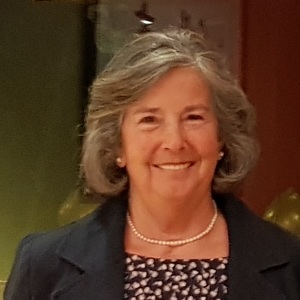


Comments