Join Sylvie Hampton who is discussing being an “Expert Witness”. Sylvia has over twenty years of experience and will talk about being an expert witness and her insight in the role.
Transcript (auto-generated)
This transcript was generated automatically and may contain errors.
Hello, I'm Sylvie Hampton and I'm an independent tissue viability nurse consultant and I've been an expert witness now for 20 years and have produced hundreds of reports In this podcast I intend to provide a flavour of being an expert witness and to provide some case studies to support why I act as an expert witness An expert witness is employed to write a report that a judge would be able to follow to enable a judgment on the case and the judge will do this based on the Bolam test. Mr Bolam was a voluntary patient at a mental health institution and he'd agreed to undergo electroconvulsive therapy. He was not given any muscle relaxant and his body was not restrained during the procedure and he flailed about so violently before the procedure was stopped, he suffered some injuries including fractures of the acetabula. He then sued the committee for compensation and argued they were negligent for not issuing relaxants, not restraining him and also not warning him about the risks involved. Expert witnesses were unknown at that time in 1957 and the judge needed support in making a decision and those expert witnesses had confirmed that a great deal of medical opinion at that time in 1957 was opposed to the use of relaxant drugs and that manual restraints could sometimes increase the risk for fracture and that at that time it was common practice of the profession not to warn patients of the risk of treatment particularly when that risk was small. In the case of Bolum, the verdict was in favour of the defendant hospital, based on the judge's decision. He felt that given the general expert witness opinions about what was acceptable electroshock practice, they had not been negligent in the way they carried out the treatment. When a person professes to have personal skills, professional skills, such as doctors and nurses or even bus drivers, then the standard of care must be higher than the layman. The judge will then arrive at a decision based on whether a doctor, nurse or even the bus driver reaches the standard of a responsible body of expert opinion. If they do reach that standard then they're not considered negligent. For instance, a bus driver owes a duty of care to the people on the bus. If he drives too fast and tips the bus over, hurting passengers or even causing death, then that bus driver will be held responsible for their death. However, if a lorry comes out of nowhere, hits the bus, tips it over with the same result, they will not be held responsible. And that's the same with medical teams and nurses. If they act within their own competencies and do everything possible for the patient at the level of knowledge that they have and something goes wrong, they would not be held responsible. The expert witness must base their report on the documentation and records that those nurses have provided. If the documentation does not provide the care, then that care was never given in the eyes of the law. The management can then be held responsible through vicarious liability. You have to bear in mind that the expert witness is not looking for masses and masses of writing. Tick boxes are fine. I believe that tick boxes, if they're signed for, are equally correct as a report that somebody has written pages on. And that's because that person will have to stand up in court and swear that they gave that care that they've ticked the box for. An expert witness must express their independent expert opinion based on the information that's provided and to express that opinion they must have knowledge, skill, experience, training and or education. An expert witness can be anyone with knowledge or experience of a particular field or discipline beyond that to be expected of a layman, and the expert witness's duty is to give the court or tribunal an impartial opinion. Impartiality is very important and any opinions have to be made to help the judge, not the person who is funding the report. I am constantly expected to write into the report, no reasonable and or responsible body of nurses would fail to have done such and such, or an ordinary nurse exercising an ordinary level of skill would have done such and such. This underlines what I was saying in the beginning. The judge will then arrive at a decision based on whether anyone with a responsibility for people in their care reaches the standard of a responsible body of medical or expert opinion. There is a paradox or conflict in being an expert witness. Should you stand up and state that all nurses are wonderful, sisterhood and brotherhood, which means you are not impartial? Or should you believe that when a patient suffered that you stand up for the wronged patient? Again, this is not impartial. The expert witness makes a full chronology of the case and then can draw up a timeline of when the problem occurred and whether that could or should have been avoided. I've often had the defendant saying, yes, we didn't do everything possible to prevent, but he, she was so ill, they would have developed the ulcer anyway, and that's really not good enough. Therefore, I use the question, did the carer do everything possible in order to prevent a pressure injury or to heal a wound? If yes, they did everything possible, then my opinion would be that that pressure ulcer was unavoidable or the wound wouldn't have healed anyway. If no, they didn't do everything possible, then that would be considered avoidable and the team would be responsible for its occurrence, even if that person is likely to have a pressure ulcer anyway as it can't be proven and it may well have been avoided. In other words, we cannot assume somebody will develop a pressure ulcer and just not protect them because we consider the ulcer unavoidable. In my experience, it's generally not doctors and nurses that are wrongdoers, but the actual situation they find themselves in. Time and lack of staff and often lack of support is obviously some of the issues. However, if the error is swept under the carpet and no one supports the person who has life-changing injuries due to poor care, then nothing will change for the future. I'm going to give you a couple of for instances. We had a sister in a nursing home who had air mattresses for her residents who were at risk of pressure ulcers at a cost of £75,000 a year, a lot of money. New manager came in and said, get rid of the mattresses, I am not paying £75,000 a year. The sister fought it fiercely but she lost and the patients were developed pressure ulcers because the air mattresses were sent back and one of them died. Now she was struck off and the reason she was struck off was because she did nothing to replace the air mattresses. She didn't reposition, she didn't try to get other mattresses, she just left them for that person to see that what she did was right in putting them on air mattresses and the manager was wrong for taking them away and so she rightly got struck off and in actual fact it should have been a manslaughter case. And then there was the lady with the breast reduction, very young lady with very large breasts that were causing her problems and the consultant who did the operation took her into the treatment room and showed his colleagues the good job he'd done and then said to the nurse can you put a dressing on that wound please. Well the nurse went off around the hospital to find a dressing and it took her an hour and when she came back she did no more than drop the dressing on the floor, pick it up and put it on her breast. Now she wasn't going to go around the hospital for another hour looking for another dressing, but what actually happened from that was this poor lady got necrotizing fasciitis and lost both breasts. And then we have a gentleman in a private hospital who developed a pressure ulcer on his heel. It was very very painful after surgery on his hip and nobody took any notice. 24 hours later the nurses said to the consultant he has a sore heel so the consultant said put him on a water pot and a water pot apparently is a lemonade bottle that you fill with water and tuck it underneath the heel. Terrible terrible thing to do, absolutely dreadful. There is no research in the whole of the world that tells you that is a good idea and it kept falling out of bed with a bang through the night apparently and this poor gentleman ended up with an absolutely black heel which took two years to heal and he lost a lot of his rehabilitation. Then we have a gentleman with an ischemic right leg and an amputated left leg. He wasn't given any protection in hospital for the heel of his surviving leg. leg. Consultants felt that they could save the right leg, but a pressure ulcer developed on the heel and septicaemia set in. This is a very common story and he lost his second leg. As part of the work, you may have to visit clients to look at their injury and write a report on condition and prognosis, or it may be a liability and causation report where you review years of records to identify if the pressure injury could have been avoided. Writing the reports for the cases are long and often laboriously, and certainly interesting at times, but goodness knows you learn so much from each case, and I've really enjoyed my time as an expert witness. The 20 years have certainly not been wasted as far as I'm concerned, and I hope that gives you a flavour of what it's like to be an expert witness. Thank you very much for listening.

 Health Shared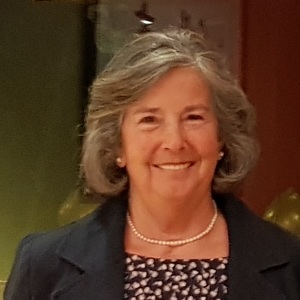


Comments