Dr Anna Galazka, a lecturer in Management, Employment and Organisation Section, Cardiff Business School.
Anna is talking about how Leg Clubs can help us address social isolation, loneliness, isolation and stigma relating to living with hard to heal wounds.
Transcript (auto-generated)
This transcript was generated automatically and may contain errors.
Hello, I am Anna Galaska. I am a social scientist with an interest in healthcare organising, a lecturer at Cardiff Business School and a researcher in the field of organisational and sociological aspects of wound care and wound healing. Welcome to this episode of Leg Club podcast. Today I am going to talk about how Leg Clubs can help us address loneliness, isolation and stigma related to living with hard to heal wounds. So this podcast will be of interest to everyone who is already familiar with the power of the leg clubs, but it is specifically designed to entice those who might not have heard about the leg clubs yet, but are curious to learn about the social infrastructure that there is to support people living with non-healing wounds. Because indeed, those of you who have had an experience of a leg ulcer, perhaps you may have known someone with a leg ulcer, will have an idea of what it's like to live with a challenging wound. So a leg ulcer is a cut, an open sore, or a wound in the lower leg that doesn't quite want to heal. It can be quite big, it can weep fluid, or it can emanate smells, especially if it's infected. And of course, it can cause people pain, anxiety, embarrassment, or it can even stop them going out of their houses. Leg ulcers often affect elder adults who may be struggling with other ailments, with declining mobility, who might experience loneliness as some family members and friends may have moved away. Loneliness has been shown to have a bad effect on our mental and physical health and for older individuals who live with unsightly wounds that can go on and on for years, sometimes even decades, this effect can be even worse. Sometimes a visit from a district nurse who will come in once a week to change the dressing on the wound is the only kind of social interaction that they might experience in a week. In recognition of these challenges, in 1995, a district nurse, then district nurse, Ellie Lindsay, set up the First Leg Club, which is an organization that meets once a week in the community that brings together people with wounds, People who would otherwise wait at home for a visit from a district nurse. Leg clubs also bring together district nurses who would otherwise have to travel to individual patients' homes. In the leg club, people with wounds get treated together in an open area, and while waiting for their turn to be treated, they can chat to other people with wounds over a cup of tea, over a cup of coffee. Today there are over 40 leg clubs, most of them in the UK, but also a few in Germany, in Finland, in Australia, and more are planned for other parts of the world. In September 2019, when I worked as a researcher with the Welsh Wound Innovation Centre and Cardiff Business School, I did the first academically-led service evaluation of the community leg clubs. What this means is that I was visiting six leg clubs the UK, sitting in on the leg clubs, watching the nurses at work, chatting to people who visited the leg clubs and the people who run the leg clubs to understand how they worked but more importantly why they worked the way they worked and this is what I learned. The mission of the leg club is to empower the whole person, their physical and mental well-being. Patients are called members. This is specifically not to put them in a sick patient role but to make sure that they feel healthy but that they simply have problems with their legs that need to be given the right treatment by the right person at the right time. Members and nurses meet once a week in a non-medical setting such as a community hall or a church. The room tends to be split into two sections. On one side of the room the nurses will set up leg treatment stations so that the members normally face each other while they have their legs looked at. The nurse A nurse can spend as much time with a member as needed, so anything from five minutes up to an hour. Members can come in any time without having to book an appointment. They can come back every week, even if they don't have a wound anymore. This means that they can still have their legs washed and creamed, or they can just have a cup of tea and a chat without seeing a nurse at all. On another side of the room, members chat, laugh, have coffee, tea, cakes, they play tumblers and have raffles, they sell homemade jams and handmade cards. So the nurses are publicly funded, but the coffee, tea, cakes or even the rent for the hire of the venue aren't. This means that they must be paid for with the funds which are gathered by leg club volunteers. Leg club volunteers are people from the community who are often retired, who may have had an experience with a leg ulcer and want to give something back to the society. The volunteers and the members own their leg club and they look after their leg club. So the Lead Clubs are not just a collection of frail individuals, but they actually inspire elder adults, elder members of the community, to function in society as active entrepreneurial individuals. Even an organisation that values people's well-being over the financial of those, however, must have an economic base to continue operating. So how do the Lead Clubs do this? Well, they take donations. Tea and coffee is a donation of 50p, with an extra 50p for a cake. It's never a set price, it's always a donation. Members can pay what they can afford, or if they cannot afford to pay, then they don't pay. Raffle tickets are about a pound. All prizes, ranging from packs of biscuits to bags of of toiletries and free haircuts at local beauty salons are donated by members, by the community, by volunteers, by nurses, by local shops and supermarkets and beauty salons. If you order in advance, you can buy specific products such as a handmade birthday card tailored to reflect your loved one's favorite football team or Christmas cards with a special message. What I bought for myself was a trauma bearer that was made by a nurse and I will keep that as a souvenir to remind myself that today there are still organisations that do good for the sake of doing good and not for money, that bring together like-minded people joined by the same life experiences, that gave people previously deemed to be homebound a place where they can flourish, bond together. As leg clubs are reopening after the enforced lockdowns, their power to overcome loneliness and social isolation should be doubly appreciated to help us all work together towards a sustainable future. Thank you for staying with me today.

 Health Shared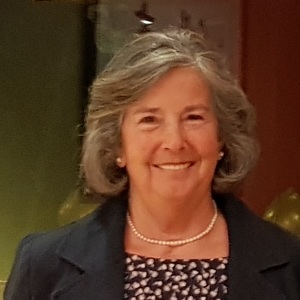


Comments