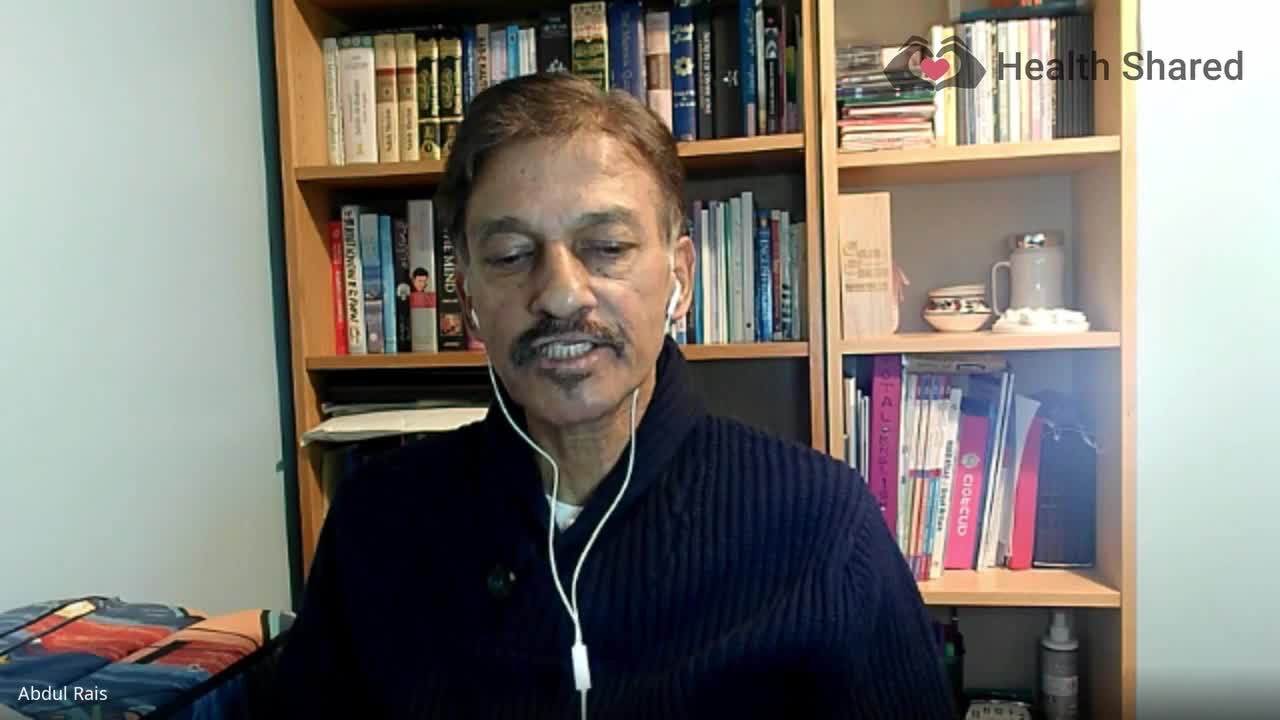
Chris talk candidly about his first experiences of being diagnosed with Type 1 Diabetes. His parents tell him that he has lost weight and was passing a lot of urine. He talks about starting insulin and having urine tests for sugar levels. His first blood sugar testing machine used to be the size of a brick!
A key theme he talks about is balance - balance between diet and exercise. He tells about having a regular 'clockwork' lifestyle to be able to use insulin predictably. A major change for him was doing a DAFNE course which allowed him to vary his diet and vary his insulin dose accordingly. Chris describes the Expert Patient programme as a major step in acknowledging his learning over his life. Finally he talks about more flexibility being possible in this day and age.
Transcript (auto-generated)
This transcript was generated automatically and may contain errors.
My first experience was back in 1960 at the age of two and a half between two half and three when I was diagnosed as diabetic at West Middlesex Hospital. My parents tell me that the signs they observed were that I was drinking a lot, I was peeing a lot and I started to weigh a lot less and, you know, in family discussions we're not sure if there was some kind of genetic inheritance or there was a trauma, there definitely was a trauma, I experienced a fall and there's a view that that might have led to some kind of shock which brought about the signs that became diagnosed as diabetes. The treatment has changed significantly in that time when I started on daily injections with urine tests, then I was put on twice daily injections and then when I started working, my first job was at Guy's Hospital and I was patient to Professor Keane who was a bit of a pioneer in his day, bless him, and there was a blood glucose machine that was available to purchase and so I bought one of those and that was one of those heavy things in my bag as it were because it was the size of a brick. It didn't weigh as much but it was the size of a brick. So I then went on a combination of short-acting insulin before meals and long-acting insulin which was taken at night, put on statins to avoid high cholesterol. And then the next major development for me was going on an insulin pump. And most recently, the significant development has been being on a pump with continuous glucose monitoring. A key theme throughout this time for me has been balance, really. and that's between exercise and activity, the type of food you eat and the carb content and also the insulin amount. Up until I was nine years old I was on a free diet and I could eat whatever I liked. It was just urine tests so it was pretty basic, not very sophisticated, not very accurate. Between the ages of nine and 28 I was on a controlled carbohydrate diet which I found quite limiting, but the main thing that I recall is that you had to have regular mealtimes. It was like clockwork and your life was determined by your insulin injections and the timing of them. So a major development for me was the Daphne force which was dosage adjustment for normal eating and for me it was life-changing because you could vary what you ate, you could vary the amount of insulin that you ate but the combination of long-acting and short-acting insulin meant that you didn't have to be quite so regular. In my family, my brother who's the middle of three children, I'm the youngest, he found this kind of regular meal time to be quite weird because it put sort of restrictions on the whole family really. I didn't see it as my fault but you know there certainly was an impact of that. And then another significant development for me was the expert patient program which I thought was great because it acknowledged the fact that I as an individual also had some expertise and could bring some experience and also there was learning to be derived from that experience. My observation is that you never stop learning in terms of treatment of diabetes because I might go for a period of three days and I think wow I've sussed this now and then something will happen and suddenly what has been a blood a great blood sugar profile either goes significantly high or significantly low and I think damn I'm back to square one again and I think you know we're all individuals we've all got different needs we'll all have different patterns but I think there's more flexibility now in terms of dealing with what people want to do rather than what they have to do. you

 Health Shared



Comments