A warm welcome to our new speaker, Professor Sergio Gianesini who is a clinical lecturer at the University of Ferrara in Italy and Vice President of the Union of Phlebology. Professor Gianesini is also the President of the vWIN Foundation.
On this Podcast Professor Gianesini discusses the importance of exercise in venous and lymphatic disease and the benefits of hydrotherapy.
Transcript (auto-generated)
This transcript was generated automatically and may contain errors.
Welcome, everybody. I'm Sergio Genesini. I'm a surgeon from the University of Ferrari in Italy, dedicated to venous and lymphatic disease. This podcast is dedicated, indeed, to the importance of exercise in venous and lymphatic disease and the benefits of either a therapy. And I'd like to deeply thank Elnie Lindsay and all the Leica Club for the kind invitation. I think they gave me a title that is absolutely perfect because the title is saying the importance of exercise, the importance. Now it's important, I think, when we are talking and reaching out to the population and like in this public also being a genetic awareness initiative, to stress out the importance of a proper evidence-based data before claiming something, because if not we surely get the risk of getting into the fake use at it. Indeed the sport and physical exercise in general is like a drug, it can be beneficial or harmful based on how we practice it. Think about the word agonism of the sport of the athletes and in reality inside the word agonism you will find that the word agony meaning that if we practice a sport way too much in a wrong way of course we can even injure ourselves. But, of course, proper physical activity is of paramount importance for proper venous return. Think about the fact that in our technical world, we usually refer to the calf as the peripheral heart that is pushing, propelling the blood back to the heart, and together with the blood also all that lymph that is the fluid in between the cells back to, indeed, the main circulation. Now, it has been demonstrated that proper physical exercise is beneficial, as I was saying, in the cardiovascular system, and in particular for the venous and lymphatic system, it can surely help the drainage. But how we should do that, what we should do, and for how long, that's a different topic. We surely have to define a dose of the physical exercise and a modality of physical exercise. First of all, we have to standardize this physical exercise to make it reproducible. In terms of venous and lymphatic drainage, a clear benefit can be found in particular in the aquatic environment, because if you really think about that, we are paying a price for the natural evolution from quadrupeds to bipeds. You are not going to have varicose veins usually on your arms, but you have them in your lower limbs and that's because we are overwhelmed by the force of gravity. For this reason we got particularly interested with our University of Padua research group in the aquatic environment, because the aquatic environment is giving you the opportunity of proper compression, meaning that every single centimeter of water is giving us a 0.7 millimeter mercury, which means that when we are standing up in a pool for example and we have 120 centimeter of hydrostatic column, this means that we are under 80 millimeter mercury. Now, consider that when we are using compression stockings, usually we are around 20. So it's like having four pairs of stockings with the magical effect of not even perceiving that. But even more, it's not just the physical properties of the water that actually can even increase if we are in a more dense aquatic environment, like for example, for example, the thermal aquatic environment, and it's also the thermal properties in terms of temperature that could influence the Venus return, and at the same time, also the chemical properties. Again, think about the chemical properties of a thermal environment with anti-inflammatory effects, for example. But it's very important, as I was saying, to standardize and make the activity reproducible. For this reason, back in 2017, we designed a protocol that we validated, published, and that is available in case you want to have a look at that in Parliament. And we demonstrated the potential benefit of this standardised reproducible protocol in terms of lower limb volume variations for venous lymphatic patients, as well also as the ankle range of motion improvement. Indeed, there was a significant correlation between the increase in the ankle range of movement and of motion and the venous and lymphatic return. We also demonstrated a significant improvement in the visual analogue scale regarding the symptoms, while there was no significant difference in the functional ambulation classification, that is a classification dedicated to the ability of the subject to walk. Now further investigation, we looked at the comparison between exercise inside and outside the aquatic environment, pointing out how there was significant benefit in doing the same exercise protocol inside the aquatic environment rather than outside, with a better lower limb volume reduction, a better ankle range of motion improvement, better quality of life, validated scores, improvement. We also performed another study pointing out the importance of bioimpedance analysis of these patients, like understanding where the fluids really are and where they are shifted to. And we demonstrated indeed a significant decrease in the extracellular water parameter. And we also demonstrated how with the proper training inside the aquatic environment there was an improvement of the cardiovascular performance in terms of the fitness level of the same subjects. Now consider that there is also a major benefit in the aquatic environment considering that you have an environment where an obese patient, thanks to the buoyancy, can more easily perform the physical exercise itself. and at the same time there is the possibility for older people to have easier movements instead of the aquatic environment compared to the trial end. In another set of investigations we looked at the importance of the type of exercise because when we are talking for example with our patients and saying to them to go walking for 30 minutes we really don't have data on how they should walk, for how long, how fast, should they wear compression. So long story short we pointed out that walking, for example, with your dog is not exactly the same as walking by yourself. It's wonderful to walk with our best friends' dogs, but at the same time, they stop and go, they stop and go. They constantly, of course, stop our walking and our activation of the calf pump. The reason why it's fundamental is that we also take the time to have a continuous walking of 30 minutes. We are used empirically to say at a speed for which you can talk, but you cannot sing in terms of cardiovascular engagement, but of course you need a proper evaluation by your physicians to understand your fitness level. At that point, walking for 30 minutes will give us a benefit in terms of venous lymphatic return, but this benefit will be surely higher if we have a proper compression arm that is facilitating the lower limb volume control, and at the same time also the perceived exertion according to a validated scale, that is the one of Borg, that is giving us an idea of how much the activity gave us exertion, for which graduated compression stockings can surely help in controlling perceived exertion according to this investigation of ours, while in the meta-analysis we have confirmation of the use of graduated compression stockings for controlling the delayed muscle While for the other benefits, we should really talk in another podcast, I think, because we have indeed the different data suggesting great potential benefits, but also a great need of proper data collection in order not to get the risk of putting together apples and oranges. With this, I deeply thank once again, my dear friend Elince and all the Light Club, and And I remain at your disposal together also with the Venus Nymphatic World International Network Foundation for collaborating more in public Venus and Nymphatic awareness, taking this chance also to invite you to visit the website and take part in the global digital and also in-person event of the Vein Week from April 4 to 10. Thank you.

 Health Shared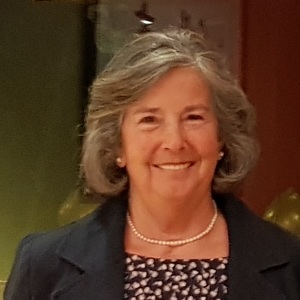


Comments