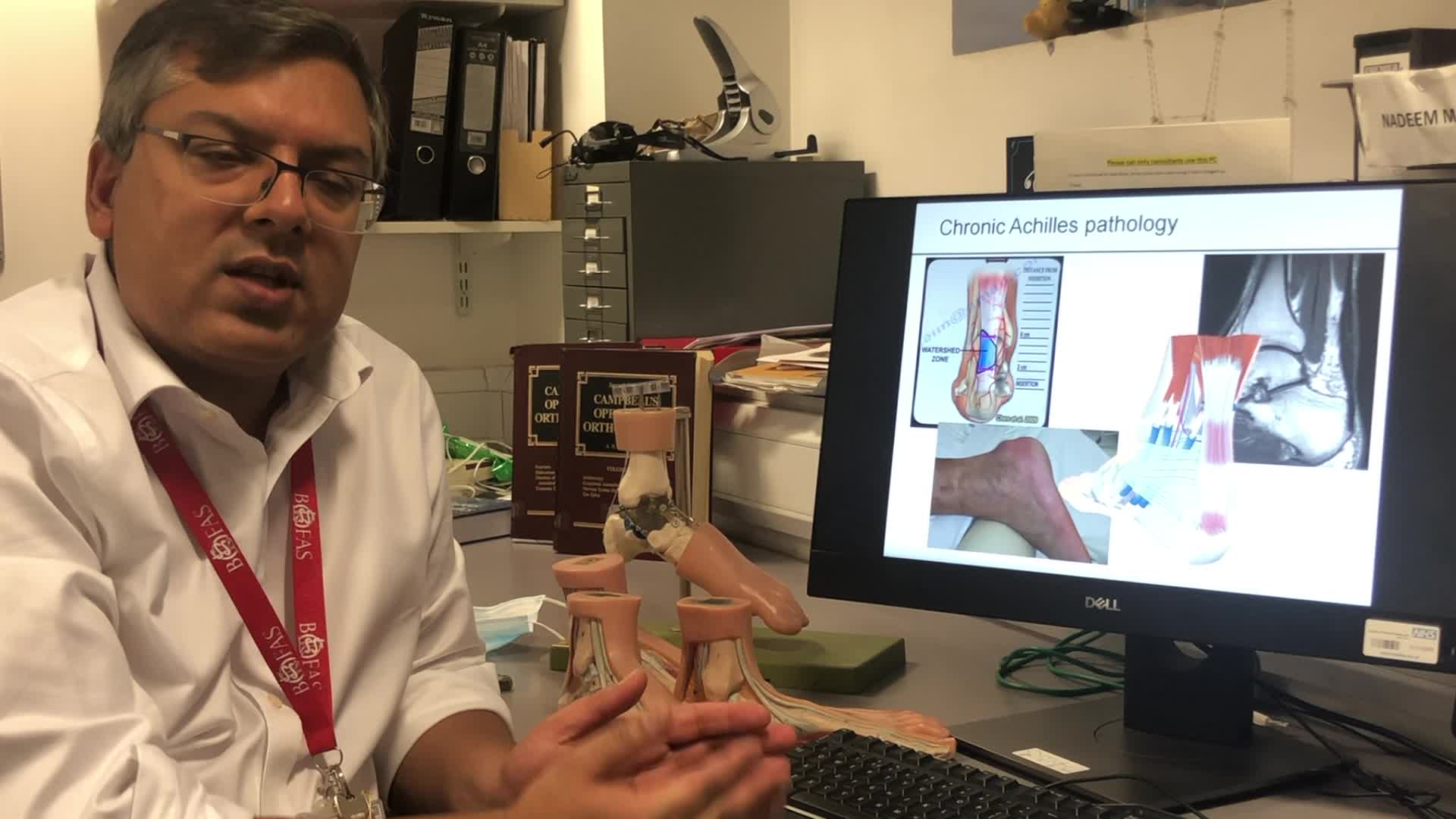
This video explores the non-surgical management, inclusive of stretching exercises and devices used in the management of Achilles tendinopathy.
Followed are risks that develop the need to intervene surgically.
This transcript was generated automatically and may contain errors.
That's the Alfredson is one of the stretches and another way of stretching out the calf muscle is against a wall so this is the correct way this is a poor technique where you're bending it back but here we're trying to stretch out the calf muscles just by pushing against the wall and then those are the two common stretches that we would use other methods of stretching out the calf is using a night splint so you'd wear that at night stretch out your calves while you're sleeping and finally you can offload the Achilles tendon by using a little heel raise throughout the day but you must remember to take it off at night so that you can stretch out your calves otherwise you're actually tightening up your calf. Those are the common ways to start treating it and they're the first line of treatments that we would normally recommend. If they're not successful then the next stage would be a thing called shockwave therapy. This is a high energy ultrasound machine which imparts the energy into the soft tissues and therefore stimulates them to heal stronger and it's used quite often in various tendonitis such as the shoulder the hip and it's also used in foot and ankle quite a lot so that that would be at my sort of second stage of treatment shockwave therapy. If physiotherapy and shockwave therapy have not worked then we're into the realms of should we inject around the tendon but then there's the risk of damaging the tendon and rupturing the tendon or should we proceed to surgical intervention and I would say that most of these patients at least 75 to 80 percent of these patients can be treated very successfully without an operation and only about 20 percent of patients will proceed to surgery.

 Health Shared


Comments