Dr Anna Galazka, a lecturer in Management, Employment and Organisation Section, Cardiff Business School.
Anna talks through findings from her post-doctoral research in which she observed the practice of 'social values creation' within Leg Clubs.
Transcript (auto-generated)
This transcript was generated automatically and may contain errors.
Hello, I'm Anna Golaska. I am a social scientist with an interest in healthcare organising, a lecturer at Cardiff Business School and a researcher in the field of organisational and sociological aspects of wound healing and wound care. Welcome to this episode of the Leg Club podcast. Today I will share with you the results of my ethnographic service evaluation of Leg Clubs in which I was seeking to explain and evidence the creation of social value in the Leg Clubs through watching how members, volunteers and nurses interacted. Between the 1st of October 2019 and the 15th of January 2020, I completed about 54 hours of observations in six UK leg clubs, and I held lots and lots and lots of conversations with people that I met in the leg clubs, out of whom about 12 members and 13 volunteers gave me their written consent to share their stories. And it is these paraphrased stories that I would like to share with you today. So the main thing that I learned about the social value creation leg clubs was that leg clubs were first and foremost a social occasion. Firstly, the key theme that was dominant throughout the informal chats was creating a sense of community. Repeatedly, when members and volunteers were asked about their experience of attending or volunteering the Light Clubs, they would start by highlighting that they enjoy the social side. As one male member said to me, I enjoy the social side of things, I enjoy having a cup of tea and a cake and also just having someone to talk to. It's terrific, I wouldn't change anything about it. Members also praised the fact that leg clubs were located in community settings because this enabled them to build new relationships with people that they didn't know or reconnect with the people that they did know but maybe had lost touch with. As one female member said to me, there is a lot of benefit to be taken from the fact that it does not happen in a surgical environment, but that it happens in a community club, that it is a community. The second thing that I discovered through my evaluation is that leg clubs were, as I described them, hubs of collective learning about wound care and wound management. Because the way in which wound care was provided and organized in the leg clubs was very distinctive. It brought medical knowledge benefits for members and nurses, giving members easier access to rich information about the condition that they lived with and the various treatment options that were available to them. For nurses there was also an opportunity to consult and learn from one another. Most members appreciated the possibility to be seen by a nurse without having to arrange an appointment in advance. Their accounts implied that the no appointment drop-in systems that leg clubs run gave them very speedy and regular access to specialist care and information that they needed to lead as healthy and independent a lifestyle as they possibly could and i found a beautiful example of that in an experience of one male member who regularly attended leg clubs that i referred to in my study as leg clubs three and five. In leg club three a male member tells me that there is a room for him to learn from the nurses. For example the iodine he was given for his wounds made his skin sting. He therefore bought a tub of an antiseptic cream over-the-counter in a pharmacy and brought it here to show the nurses to ask if he could use it instead. The nurse explained that this was only good for cuts and grazes and that he should keep the cream for that and a couple of days later I met the same member again in leg club 5. He waved me over and I asked him how his leg was going and he told me that he was silly the day before and he didn't put the shower sleeve on properly when he was showering, getting his dressing wet. Fortunately he had been to the doctors and he had had the right type of dressing at home so his mother was able to help him and change it for him but he said he also noticed that his toes were bleeding a little more than usually and that there was a lot of dry blood collecting in his dressing he said he actually had a few questions for the nurses he wanted to be shown clearly how to change the dressing because he wanted to be able to change them on his own So this is what I wrote down in my field note diary. What I also learned was that this space to ask questions without a fear of judgment was very empowering for members because it let them better understand their health and the ability to take an active part in their own care, in their own treatment, without having to rely as much on familial support on contacting a health care professional. Most leg club members also agreed that it was good for their physical state that wound care happened in this non-medical environment. The community setting demedicalized the encounter which meant that it removed the white coat effect, the stressors associated with having to go to a surgery to be seen by a clinician. As one member said to me, the leg clubs work because the healing is better, probably because of the informal atmosphere, because it is not a hospital so people do not get stressed and their blood pressure does not go up so much. Members waited to be seen by nurses not in a waiting area but in a social area that mattered for members as well. Because in the social area they were very much encouraged to talk to exchange pleasantries with other members over refreshments and such distractions to pass the time made the wait a lot more pleasant. It made it a very pleasant social experience. As explained by one female member, I have been here for an hour. I would have been huffing and puffing in a hospital but I don't mind it here because there is a sense of community and an opportunity to have a cup of tea and some cake. The third thing I would like to talk to you about is that the open plan leg club layout made members feel a lot less nervous about their treatment. That's compared with a more regular treatment environment behind closed doors because members could see that nurses were working hard and this scale helped them gauge when they would be seen so it helped them feel a lot less impatient. They also appreciated the transparency of what was happening on the clinical side especially new members who didn't know what to expect. They were able to see what was happening on the other side of the room and this alleviated their fear of the unknown. As one female member said to me this is my first visit i was a little unsure as to what would happen but coming in and having everything transparent makes me feel less scared and more relaxed because i know what is coming there is transparency like there is transparency in a restaurant when you can see what goes on in the kitchen and finally leg clubs are creating avenues for older adults to continue to participate in a society in ways that are personally and socially meaningful. And here I would like to say a few words about the volunteers, for whom clubs were very much an opportunity for a continued meaningful engagement with the wider community after they retired. A lot of volunteers had a set of professional skills that they felt very connected to, they had a great managerial acumen or leadership skills and they were able to apply those skills in a new setting help a new group of individuals and benefit the local community. They could acquire new skills outside of their own professional domain if they wanted to increase their compassionate understanding of what it's like to live with wounds. Retirement as a change in life can put people in a temporary state of loneliness, which the leg clubs very much help address. And I would just like to end with a beautiful quote which captures the altruism that underpins the leg club philosophy. One volunteer told me, what would I do then if I wasn't needed? We get something out of it too. I stopped working 18 months ago but didn't want to stay at home. I didn't want to take up a full-time job either so I got involved in the leg clubs because it gets me out of the house and because it means I am doing something for the other people rather than sitting at home and doing things for myself. If you would like to hear more stories and experiences from leg club members and volunteers then I encourage you to visit the website of the Lindsay Leg Club Foundation where you can find the full report for my study. Thank you for being with me today. Music

 Health Shared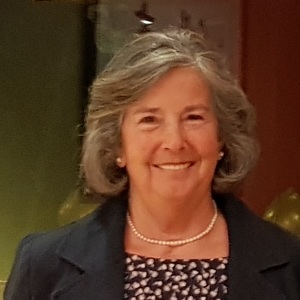


Comments