We are delighted to welcome a new speaker, Helen Wood who gives a fascinating insight into the role of the Occupational Therapist.
Helen graduated from Cumberland College of Health Sciences in 1989.
She then moved to the United States and worked in adult rehabilitation in a large hospital in Washington D.C. She has focused her career on neurological rehabilitation and after return to Australia she obtained her Masters Of Occupational Therapy at The University of Sydney.
Helen has presented at numerous conferences both domestically and overseas and has co-authored a publication on autologous transplant. She has taught undergraduate occupational therapy students and has worked for many years completing medicolegal assessments for clients seeking compensation through the legal system.
Helen's area of specialization is in adult neurological rehabilitation and traumatic brain injury. She currently works in her own private practice and in a private hospital working with adults with neurological impairments.
Transcript (auto-generated)
This transcript was generated automatically and may contain errors.
Welcome to another podcast from the Lindsay Leake Foundation. I'd like to introduce Helen Wood today. Helen is an occupational therapist who has worked for the last 32 years in physical rehabilitation. She was trained in Sydney, Australia and after graduating she worked for many years in the United States before returning home. She currently works in private practice in the medical legal field and in a private hospital working with adults in neurological rehabilitation. So Helen, let's start with what is occupational therapy? Thanks, Dave. Occupational therapy is a health profession that focuses on promoting the independence of people who have a disability and that could be either a disability they were born with or that they've acquired over their life. Our training is in a really wide range of areas and so occupational therapists could be providing treatment to anyone from early childhood till the elderly. Our particular focus is on enabling people to be as independent as possible with the activities that they need to do or want to do. So we focus on tasks which are meaningful and important to them, not what we think they should be focusing on. And so if we have two people with the same injury or same disability, occupational therapists might be working on quite different tasks and goals for each person. So I'll give you an example. Perhaps I'm working with two people who've both had a stroke. One person might be a mum who needs to be able to use her arm and hand to hold on to a shopping trolley and push it along because that's something she did prior to having her stroke and she wants to return to that once she gets home. Whereas another person, say an elderly man who's also had a stroke, he might want to focus on improving his balance because he wants to return to gardening. So my intervention as an occupational therapist is dependent on the person and what their goals are. Okay, so what sorts of places do occupational therapists work in? Well, one of the wonderful benefits of being an occupational therapist is we can work in a huge range of places. So that might include working in schools with children who've got disabilities. We might work in a community centre, and that might be with people who've got a mental health problem where we'd be focusing on their living skills, such as their ability to cook or budget their money. We also work in hospitals, which is what I currently do. So that might be working with people who've been injured in a car accident, have Parkinson's disease, they might have fallen and fractured their hip, or they might have been diagnosed with a condition like motor neurone disease. We can also work in private practice, which is another area I work in. Here, occupational therapists complete medical legal assessments, where we outline what an injured person might need in terms of their care and equipment for their lifespan. Or we might work as case managers helping people once they're discharged home. Lots of occupational therapists also work in an area called vocational rehabilitation and that focuses on getting injured workers back to their pre-injury employment. Other occupational therapists might work in a specialist technology role, assessing people's need for equipment, for example a computer so they can access a computer or technology in their home that promotes their independence. So the list really goes on, there's loads of opportunities. So Helen, how could an occupational therapist help me if I'd had a stroke for instance? Well first we'd meet with you and your family to try and get a bit of an understanding about the life that you were leading before you had your stroke. So we really want to understand what sort of environment you live in, the lifestyle and the demands you had before your stroke, as obviously we generally want to try and get you back to that after you leave hospital. So understanding your background helps us shape our intervention to exactly what your priorities are. Then we would start assessing your function. So with a stroke, depending on what part of the brain was affected, you would have different deficits and impairments. So we need to complete various assessments to get a baseline understanding of your abilities. So some of our typical assessments might be testing your range of motion or your muscle tone or your coordination. We'd have a look at your strength and have you got sitting balance and adequate standing balance. We might be testing your sensation to see if there's been any change in that or in your vision. We also spend a lot of time assessing people's thinking skills or cognitive skills. So that's looking at whether the stroke has affected your ability to concentrate or solve problems, remember things or organize yourself in a task. And along the way we might decide to do a visit to your home so that I can start considering what modifications might be needed before you return home to enable you to be safe and independent. During your hospital stay I'd also be assessing your needs for equipment which might be needed for you to be safe or enable you to do an activity independently. So some examples might be I might prescribe you a wheelchair so that if you can't walk long distances, you still have the option for getting out in the community. You might need a seat to sit on in the shower, if your balance isn't great, or if you've got some weakness and coordination problems in your dominant hand, you might need cutlery with thicker handles so that you can grip them and then feed yourself. After we've done our assessments, we then meet with you and your family to establish some goals for your hospital stay. Evidence shows that goals help to motivate people and they provide us all with a clear direction of where we want to head and enable us to measure your performance over time and our own effectiveness. Then comes the daily treatment, which is focused on addressing the goals. This is where the hard work comes in, David, and requires you to put in lots of effort, both during our therapy sessions together, but also relies heavily on you practicing things outside of those formal sessions. We know that patients who complete their exercises and therapy outside of our formal sessions do much better than those who don't. So I often say to clients, you're the star athlete, I'm just your coach. You need to do all the work. I'm just here to guide you. So to address our goals, we tend to use two different approaches. And we'd ask ourselves, can I fix or remediate David's problems through intensive therapy? Or can I help you to compensate or work around your disability? Ah, okay, Helen. So to help us understand that, would you be able to give us an example of what you mean? Yeah. Okay, so let's say someone has problems with grip and coordination in their hand after they've had their stroke. For the first approach, the remediation approach, we might look at hand strengthening and coordination exercises to improve your function. But if we feel it's unlikely that you're going to regain adequate control to be able to do a task like say cutting an onion with your affected hand, we might suggest to you to look at a food processor that would do the task safely for you. So that's the second option, the compensation strategy. So both approaches still aim for you to be independent doing a task, it's just there's two different ways to get there. Interesting. How do you think occupational therapy has changed over time? Occupational therapy has always been very client focused but one of the big changes over time is the increasing use of technology in rehabilitation. Technology has provided amazing opportunities for people with disabilities and new devices, software and equipment are regularly coming onto the market. In my working life I've had some great opportunities using technology with clients to promote their independence. I'll give you a few examples of some of my memorable clients. When I worked in America, I worked with a man who'd had a very severe traumatic brain injury. In fact, he'd had part of his brain removed due to uncontrolled epilepsy. And because of that, he couldn't retain any information in his head beyond two or three minutes. So using technology he was able to resume showering and dressing independently using audio prompts which I recorded that would help him start and then sequence the whole routine. So once he was home his wife would play the recording every morning and off he went completing his showering and dressing routine following the audio prompts step by step. This enabled his wife to be able to get herself ready for work rather than having to stand there and verbally tell him every step every morning. So this option enabled him to move from being fully reliant on his wife to being completely independent with his personal care and technology was the key in enabling that. I also had a man with advanced motor neurone disease. The speech therapist and I worked together to set up eye gaze technology which used an infrared beam which shone across his eye. The man looked at an alphabet board in front of him and when he looked directly at the letter he blinked. His eye gaze beam was then linked to a communication aid which then spoke the letter and formed words and sentences. So with this technology he was able to communicate. And one more example, I had a lovely gentleman who very sadly lost all of his fingers from one hand in a bushfire. His goal was to be able to return to fishing. I was able to make a hand split which fitted over his stump. He was then able to lock his fishing rod into the split and very wonderfully he was able to return to fishing again. So these are all examples where technology combined with therapy has enabled clients to resume doing tasks and activities which are important to them. So finally, Helen, tell me what do you like about being an occupational therapist? Well, I love getting to know my clients and their lives and forming connections with people who are often experiencing a really difficult period in their life. It's great seeing them grow, become more confident and improve in their abilities over time. It's really rewarding seeing someone coming to hospital who's initially quite disabled and then leaving and being able to resume a fully or at least partially independent lifestyle. I also enjoy connecting with people's families as we frequently spend time training them in how to care and support their person at home and how to use and manage the equipment they need. It's really rewarding seeing family members move from being initially very overwhelmed and anxious about how they're gonna cope after leaving the security of the hospital environment to becoming more confident and skilled after we train them up. Another great thing about occupational therapy we get to work with other allied health practitioners like speech pathologists, physiotherapists, psychologists, dieticians and of course we work alongside doctors and nurses all with the aim of getting the person home safely and as independently as possible. So being part of a team is very rewarding because we all share this common vision. I also like acting as an advocate for my clients and that might include being able to explain a person's need for equipment or care in a report I write for the court system. Or it might be writing a report and explaining to a non-health professional why they need funding for a piece of equipment. Another thing I like is occupational therapy allows for great creativity in how you help clients and it's very practical which I also like. So from a practical perspective I might take my client to a supermarket and there in that real-world environment we might work on their visual scanning abilities or their ability to manage their money or their ability to carry their shopping. All those skills they're going to need once they return home. Another benefit of this career is it's allowed me to work and travel and as you know I worked for many years in the United States, which was an amazing opportunity, which I really cherish. And finally, occupational therapy has lots of flexibility. So it's enabled me to work and raise a family and have lots of diversity in what I've done. So if you're looking for a great career, occupational therapy might be it. Thank you, Helen, for your insights into the world of occupational therapy.

 Health Shared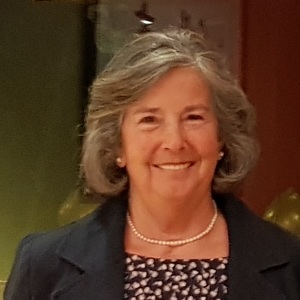



Comments